Top Ten Garden City in Kuala Lumpur
Despite the growing number of skyscrapers and accelerated development, Kuala Lumpur is still a city filled with beautiful parks and gardens.
1. Perdana Lake Gardens
This is one of the premier green lungs of Kuala Lumpur, which is just right across the Parliament building and was once home a British colonial official. It is a 92ha parkland and a great to unwind and be one with nature right in the centre of the city.
2. Butterfly Park
Home to more than 6,000 butterflies of some 120 species, it is beautifully landscaped to include flower and fruit plants and some rare herbs that are important in the diet and pollinating activities of butterflies. It is an educational walk in the park in a simulated natural rainforest environment where one can learn about the life cycle and mating habits of these beautiful creatures.
3. Orchid Garden
Orchids have never failed to amaze the thousands of visitors who come to see the more than 800 species grown in this garden. On weekends, this garden turns into a beautiful and crowded orchid bazaar. Admission is free.
4. Hibiscus Garden
A garden to honour the national flower, this place has more than 2,000 varieties of the rare and exotic blooms. It is also an educational tour where one learns that the hibiscus is actually made up of many varieties and each is different from the next with some being a single petal variety and others, a multiple petal variety. Admission is free and weekend bazaars are also held here.
5. Kuala Lumpur Bird Park
One of the most popular tourist attractions of Kuala Lumpur, it is home to more than 5,000 birds of some 50 species, of which 90% are local species and the remainder imported.
6. Asean Sculpture Garden
This garden has a collection of prize winning sculptures by some of the finest artists in the Asean region. It is located behind the National Monument.
7. Kuala Lumpur City Centre Park
This beautifully landscaped park was the last inspired masterpiece of the late Roberto Burle Mark, a versatile and talented Brazilian master of gardens. A combination of trees, shrubs, structure of cement, stones and wood as well as water features were included to dispel the notion of a static garden. It is directly behind the must-visit Petronas Twin Towers and shopping heaven - the Kuala Lumpur City Centre or KLCC.
8. Titiwangsa Lake Gardens
This is one of the most popular metropolitan recreational parks, located in the northern part of the city. It features tennis courts, an exercise area, children's playground and other recreational facilities for water sports and jogging, and of course, the Eye on Malaysia!
9.Bukit Kiara Botanical Gardens
A designated green lung that is a beautiful sprawling park, it is a popular ground for residents of Damansara, Sri Hartamas, Taman Tun Dr Ismail and Bandar Utama. Its serene and captivating scenery soothes the mind, especially after a long and hard day at work.
10. Taman Tasik Permaisuri
This is one of the newest parks planned in the Cheras area and is one of the favoured areas for residents to jog and exercise, especially during weekends.
Author: Mansid
Email: abdrahaman@gmail.com
Related blog: Malaysian Food Blog
Sponsor Link
Why Blog? The Purpose of Blogging
Sunday, August 2, 2009

Saturday, June 20, 2009
Malaysian Stars
If you had to choose seven Malaysian icons, which would you vote for?
There are lots of things and places that we think of as truly Malaysian. But if you had to choose just seven, which ones would you vote for? We take a look at 10 possibilities.
1. Petronas Twin Towers, Kuala Lumpur
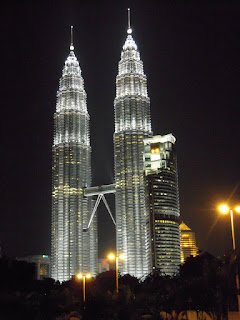
Designed by the Argentine-American architect Cesar Pelli, and completed in 1998, these are the world's tallest twin towers.
Each tower has 88 floors plus spires that reach to a height of 452m. Inside the towers, there are offices, a shopping centre, a concert hall and art gallery.
Office worker who want to cross over between towers can take the Skybridge that links the 41st and 42 floors.
2. The Stadthuys, Malacca
The Stadthuys, nicknamed "Red Square", was built in 1650. It was the office of the Dutch Governor and Deputy Governor. Today, it is the oldest remaining Dutch historical building in Asia.
3. Batu Caves, Kuala Lumpur
The Batu Caves were discovered in 1892. When Hindu devotees set up a shrine to Lord Murugan, it began to attract many pilgrims.
Most come for the Thaipusam festival that celebrates two events: the birthday of Lord Murugan, the son of Lord Siva and his wife Parvati, and Lord Murugan's defeat of the evil demon Soorapadman with the aid of a powerful lance given to him by his mother.
Others come to see the 42.7m tall statue of Lord Murugan, and the cave decorated with images of Hindu deities.
4. Cheng Hoon Teng Temple, Malacca
Malaysia's oldest Chinese temple was built by Malacca's Kapitan Tay Hong Yong in the mid-17th century. The materials were shipped directly from China.
Also known as the Temple of the Bright Clouds, the whole construction covers an area of 4,600 sq metres. A huge complex, made up of small alter areas built around a central edifice, the whole area smells deliciously of flowers and incense.
5. Kampung Kling Mosque, Malacca
The Kampung Kling Mosque was built in 1748. The people who funded it were Indian Muslim traders. Set in a quiet garden in the old part of Malacca, this is one of the oldest mosques in Malaysia. It is famous for its three-tier roof and pagoda-like minaret.
6. The Kek Lok Si Temple, Penang
The Kek Lok Si Temple is the largest Buddhist temple in South-East Asia. Construction began in 1890 and still not finished.
Attractions include a 30.2m tall bronze statue of Kuan Yin, the Goddess of Mercy. There are also koi ponds and ponds where you can release turtles.
As the temple is built on a hillside, there are lots of steps to climb. But if you're feeling lazy, there is also an inclined lift that will carry you up.
7. Mulu Caves, Miri
The Mulu Caves in Sarawak attract thousands of tourists every year. It has huge caves and hundreds of kilometres of tunnels, many of which are as yet unexplored.
The Sarawak Chamber is 600m long, 450m wide and 100m high - so large that you could park 10 jumbo jets inside. It is the largest known underground chamber in the world.
Equally impressive is the 107km long Clearwater Cave. It has one of the world's longest underwater rivers. But would you want to swim in the dark?
8. Roti Canai and Teh Tarik
There are lots of Indian flat breads like parata and naan but roti canai is purely a Malaysian product. Also called flying bread, it is one of the most popular coffee shop dishes.
Teh tarik, made from black tea and condensed milk, is found in Malaysia, Singapore and Brunei Translated, it means "pulled tea" in Bahasa Malaysia. No doubt the name was inspired by the way tea makers pour the drink from great heights to mix it well.
9. Mount Kinabalu, Kota Kinabalu

Mount Kinabalu in Sabah is Malaysia's highest mountain. Its peak lies 4,095m above sea level. Thousands of tourists take part in the 8km trek up and down the mountain every year.
Kinabalu is also famous for its biodiversity. It has over 800 species of orchids, 600 species of ferns, 300 species of birds and more than 100 mammal species. Plus, many of the creatures that live here don't live anywhere else in the world.
10. The Orang Utan, Borneo
Orang utans share more than 97% of their DNA with us. They are also considered the most intelligent species on earth - after us.
Wild orangutans turn leaves into rain hats, make roofs for their nests during the rainy season, and teach their children these skills to.
The "man of the forest" is one of the most popular apes in the world. If you look at Malaysian tourist posters, you'll see the orang utan is a popular local star too!
Author: Mansid
Email: abdrahaman@gmail.com
Related Blog: Malaysian Food Blog
Sponsor Link
Proven Ways to Make Money on the Internet
There are lots of things and places that we think of as truly Malaysian. But if you had to choose just seven, which ones would you vote for? We take a look at 10 possibilities.
1. Petronas Twin Towers, Kuala Lumpur

Designed by the Argentine-American architect Cesar Pelli, and completed in 1998, these are the world's tallest twin towers.
Each tower has 88 floors plus spires that reach to a height of 452m. Inside the towers, there are offices, a shopping centre, a concert hall and art gallery.
Office worker who want to cross over between towers can take the Skybridge that links the 41st and 42 floors.
2. The Stadthuys, Malacca
The Stadthuys, nicknamed "Red Square", was built in 1650. It was the office of the Dutch Governor and Deputy Governor. Today, it is the oldest remaining Dutch historical building in Asia.
3. Batu Caves, Kuala Lumpur
The Batu Caves were discovered in 1892. When Hindu devotees set up a shrine to Lord Murugan, it began to attract many pilgrims.
Most come for the Thaipusam festival that celebrates two events: the birthday of Lord Murugan, the son of Lord Siva and his wife Parvati, and Lord Murugan's defeat of the evil demon Soorapadman with the aid of a powerful lance given to him by his mother.
Others come to see the 42.7m tall statue of Lord Murugan, and the cave decorated with images of Hindu deities.
4. Cheng Hoon Teng Temple, Malacca
Malaysia's oldest Chinese temple was built by Malacca's Kapitan Tay Hong Yong in the mid-17th century. The materials were shipped directly from China.
Also known as the Temple of the Bright Clouds, the whole construction covers an area of 4,600 sq metres. A huge complex, made up of small alter areas built around a central edifice, the whole area smells deliciously of flowers and incense.
5. Kampung Kling Mosque, Malacca
The Kampung Kling Mosque was built in 1748. The people who funded it were Indian Muslim traders. Set in a quiet garden in the old part of Malacca, this is one of the oldest mosques in Malaysia. It is famous for its three-tier roof and pagoda-like minaret.
6. The Kek Lok Si Temple, Penang
The Kek Lok Si Temple is the largest Buddhist temple in South-East Asia. Construction began in 1890 and still not finished.
Attractions include a 30.2m tall bronze statue of Kuan Yin, the Goddess of Mercy. There are also koi ponds and ponds where you can release turtles.
As the temple is built on a hillside, there are lots of steps to climb. But if you're feeling lazy, there is also an inclined lift that will carry you up.
7. Mulu Caves, Miri
The Mulu Caves in Sarawak attract thousands of tourists every year. It has huge caves and hundreds of kilometres of tunnels, many of which are as yet unexplored.
The Sarawak Chamber is 600m long, 450m wide and 100m high - so large that you could park 10 jumbo jets inside. It is the largest known underground chamber in the world.
Equally impressive is the 107km long Clearwater Cave. It has one of the world's longest underwater rivers. But would you want to swim in the dark?
8. Roti Canai and Teh Tarik
There are lots of Indian flat breads like parata and naan but roti canai is purely a Malaysian product. Also called flying bread, it is one of the most popular coffee shop dishes.
Teh tarik, made from black tea and condensed milk, is found in Malaysia, Singapore and Brunei Translated, it means "pulled tea" in Bahasa Malaysia. No doubt the name was inspired by the way tea makers pour the drink from great heights to mix it well.
9. Mount Kinabalu, Kota Kinabalu

Mount Kinabalu in Sabah is Malaysia's highest mountain. Its peak lies 4,095m above sea level. Thousands of tourists take part in the 8km trek up and down the mountain every year.
Kinabalu is also famous for its biodiversity. It has over 800 species of orchids, 600 species of ferns, 300 species of birds and more than 100 mammal species. Plus, many of the creatures that live here don't live anywhere else in the world.
10. The Orang Utan, Borneo
Orang utans share more than 97% of their DNA with us. They are also considered the most intelligent species on earth - after us.
Wild orangutans turn leaves into rain hats, make roofs for their nests during the rainy season, and teach their children these skills to.
The "man of the forest" is one of the most popular apes in the world. If you look at Malaysian tourist posters, you'll see the orang utan is a popular local star too!
Author: Mansid
Email: abdrahaman@gmail.com
Related Blog: Malaysian Food Blog
Sponsor Link
Proven Ways to Make Money on the Internet
Wednesday, April 29, 2009
More To Muar Than Meets The Eye
More To Muar Than Meets The Eye
SIM BAK HENG - writes about the colourful history and development of Muar, a town known for its well-crafted furniture and scrumptious food.
It is always interesting to know how a place derives its name. Muar, often called a pensioners' town, got its name by virtue of its location in an estuary, or muara in Malay.
Before it was named Muar, it was called Teluk Dalam, or Inney Bay. Teluk Dalam and muara have georgraphical meanings, as both are located between land and sea.
Muar’s history is said to have started much earlier than the Malacca sultanate. A 1361 record shows that a Buddhist monk in the Majapahit palace named Prapanca wrote a poem, Nagarakertagama, which recorded the history of the Majapahit empire in the Malay peninsular.
The king was Hayam Wuruk and his prime minister was Gajah Mada (1350-1389). Muar was one of the states in this empire.
Another historical account states that Paraweswara, the founder of the Malacca empire, had built a wooden fort at Pagoh in Ulu Muar, after his exile from Temasik, before going to Malacca.
In Malay historical literature, Temasik, which was then ruled by Sultan Iskandar Syah, was defeated by the Majapahit empire.
The sultan moved to Muar where he opened two areas near Sungai Muar called Biawak Busuk and built a fort named Kota Buruk. He eventually moved to Malacca and built the empire.
Muar is home to the tomb of Sultan Alauddin Riayat Shah (1477-1488), the only existing tomb of the Malacca sultanate. Other tombs were destroyed during the Portuguese occupation of Malacca.
Muar played a role in resisting the Portuguese occupation of Malacca in 1511. In response to attacks from the Portuguese fleet, the Bentayan fort was built by the sultan of Malacca to repel seaborne invasions.
A Portuguese fort named Fortaleza de Muar was built in Bentayan to defend the colony against the Dutch and Acehnese attacks.
Today, Muar is the royal town of northern Johor. It was also known as Bandar Maharani (Empress Town), a name given by Sultan Abu Bakar in 1884.
It was the only town in Malaysia that had its own rail-link, known as the Muar State Railways, operating just four years after the country’s first railway line from Taiping to Port Weld was inaugurated in 1885.
The railway operated from 1889 to 1925, linking Jalan Sulaiman in Muar and Sungai Pulai for 22.5km.
There was a plan in 1916 to extend the line to Batu Pahat but the project didn’t take off due to financial and geographical constraints.
The railway provided a means of transportation for people and produce. However, its prominence dwindled after the opening of Jalan Abdul Rahman, which linked Muar and Parit Jawa in 1918.
The only relic of the railways today is the display of a MSR locomotive in Taman Tanjung Emas.
Another important mode of transportation was the ferry and boats for people on both sides of Sungai Muar, until the Sultan Ismail bridge was built in 1909.
Muar is a treasure trove of old buildings. The Muar Royal Customs and Excise Office built in 1909 in Jalan Maharani is an important landmark.
The Sultan Ibrahim Jamek Mosque in Jalan Petri has a minaret in its backyard and a signboard with Chinese characters.
Another landmark is the Sultan Abu Bakar building (built in 1921), which is a replica of the Istana Besar of Johor Baru, now the Johor Royal Museum.
Many shophouses are prewar buildings with neo-classical facades, and Jalan Meriam has many colonial-styled residential buildings.
Muar today is known for its furniture industry and food. The furniture industry has provided jobs for locals, while the food attracts people from near and far.
So the next time you visit Muar, check out the historical buildings to feed your appetite for culture and don’t forget the food to satisfy your stomach.
Some of the other sites worth visiting are the oddly named Biawak Busuk (Smelly Monitor Lizard), Kota Buruk (Ruined Fort) and Sungai Mati (Dear River).
Curious about the origins of these names? Look out for part two of the story of Muar.
Source: New Straits Times, April 1, 2009.
SIM BAK HENG - writes about the colourful history and development of Muar, a town known for its well-crafted furniture and scrumptious food.
It is always interesting to know how a place derives its name. Muar, often called a pensioners' town, got its name by virtue of its location in an estuary, or muara in Malay.
Before it was named Muar, it was called Teluk Dalam, or Inney Bay. Teluk Dalam and muara have georgraphical meanings, as both are located between land and sea.
Muar’s history is said to have started much earlier than the Malacca sultanate. A 1361 record shows that a Buddhist monk in the Majapahit palace named Prapanca wrote a poem, Nagarakertagama, which recorded the history of the Majapahit empire in the Malay peninsular.
The king was Hayam Wuruk and his prime minister was Gajah Mada (1350-1389). Muar was one of the states in this empire.
Another historical account states that Paraweswara, the founder of the Malacca empire, had built a wooden fort at Pagoh in Ulu Muar, after his exile from Temasik, before going to Malacca.
In Malay historical literature, Temasik, which was then ruled by Sultan Iskandar Syah, was defeated by the Majapahit empire.
The sultan moved to Muar where he opened two areas near Sungai Muar called Biawak Busuk and built a fort named Kota Buruk. He eventually moved to Malacca and built the empire.
Muar is home to the tomb of Sultan Alauddin Riayat Shah (1477-1488), the only existing tomb of the Malacca sultanate. Other tombs were destroyed during the Portuguese occupation of Malacca.
Muar played a role in resisting the Portuguese occupation of Malacca in 1511. In response to attacks from the Portuguese fleet, the Bentayan fort was built by the sultan of Malacca to repel seaborne invasions.
A Portuguese fort named Fortaleza de Muar was built in Bentayan to defend the colony against the Dutch and Acehnese attacks.
Today, Muar is the royal town of northern Johor. It was also known as Bandar Maharani (Empress Town), a name given by Sultan Abu Bakar in 1884.
It was the only town in Malaysia that had its own rail-link, known as the Muar State Railways, operating just four years after the country’s first railway line from Taiping to Port Weld was inaugurated in 1885.
The railway operated from 1889 to 1925, linking Jalan Sulaiman in Muar and Sungai Pulai for 22.5km.
There was a plan in 1916 to extend the line to Batu Pahat but the project didn’t take off due to financial and geographical constraints.
The railway provided a means of transportation for people and produce. However, its prominence dwindled after the opening of Jalan Abdul Rahman, which linked Muar and Parit Jawa in 1918.
The only relic of the railways today is the display of a MSR locomotive in Taman Tanjung Emas.
Another important mode of transportation was the ferry and boats for people on both sides of Sungai Muar, until the Sultan Ismail bridge was built in 1909.
Muar is a treasure trove of old buildings. The Muar Royal Customs and Excise Office built in 1909 in Jalan Maharani is an important landmark.
The Sultan Ibrahim Jamek Mosque in Jalan Petri has a minaret in its backyard and a signboard with Chinese characters.
Another landmark is the Sultan Abu Bakar building (built in 1921), which is a replica of the Istana Besar of Johor Baru, now the Johor Royal Museum.
Many shophouses are prewar buildings with neo-classical facades, and Jalan Meriam has many colonial-styled residential buildings.
Muar today is known for its furniture industry and food. The furniture industry has provided jobs for locals, while the food attracts people from near and far.
So the next time you visit Muar, check out the historical buildings to feed your appetite for culture and don’t forget the food to satisfy your stomach.
Some of the other sites worth visiting are the oddly named Biawak Busuk (Smelly Monitor Lizard), Kota Buruk (Ruined Fort) and Sungai Mati (Dear River).
Curious about the origins of these names? Look out for part two of the story of Muar.
Source: New Straits Times, April 1, 2009.
Monday, March 30, 2009
Visit Malacca
Where history comes alive
Tourists the world over visit Malacca largely for its antiquated charms.
That it has been gazetted an United Nations Educational, Scientific and Cultural Organisation (Unesco) World Heritage site has also helped draw in the visitors. Indeed, almost every nook of the city is replete with historical significance.
Its old, uniquely-designed buildings are one of the main attractions. Every day, busloads of tourists arrive to take in the charming splendour of these vestiges of Malacca’s past.
The Stadthuys, St Paul’s Church, mosques, temples and mausoleums are among the places that attract swarms of tourists.
Interestingly, and unique to Malacca, too, are its heritage-themed hotels. These are popular as not only are they cosy, they give tourists the opportunity to live and breathe Malacca’s past.
The hotels are well-known among foreign tourists, too, and as such, are usually fully-booked, especially on weekends and holidays.
Heeren House looks nondescript from the outside but step inside and one will virtually be transported to another time.
Located right in the centre of town - the old part of it - next to Sungai Malacca, Heeren House, which was once a warehouse, a coffee shop and a family home, is now a hotel furnished with colonial and Peranakan furniture.
It has a homely ambience and would be particularly nostalgic for those who grew up in a Peranakan household. The rooms are simple but fitted with modern amenities.
There are souvenirs for sale and a small café at the ground level of the hotel, which should more appropriately be referred to as a guesthouse, given its home away from home atmosphere.
It is also strategically located. Walk several metres and one will reach the bustling Jonker Street, which has everything from antiques and kebaya nyonya to ethnically-styled clothing for sale.
Another hotel with a heritage theme is Puri Hotel, located not too far from Heeren House.
Puri Hotel once belonged to the descendants of an eminent philanthropist and rubber plantation owner, Tan Kim Seng and it has been carefully and beautifully restored.
It has a beautiful interior that is decorated with antique chairs and vases, which lend it a heritage touch.
Like Heeren House, accommodation at Puri Hotel is reasonably priced compared with some of the more upmarket hotels in the city.
A luxurious heritage-themed hotel called Majestic Malacca has recently been launched.
A totally reconstituted 54-room hotel, the Majestic Malacca, previously known as the Majestic Hotel, is YTL Hotel’s first classic hotel in Malacca.
The Majestic, also located on the bank of Sungai Melaka, was once a private mansion that was built in the 1900s. It has been redesigned to integrate the old with the new, and the modern with the historic.
Abd Rahaman Rasid
abdrahaman@gmail.com
Source: New Straits Times, Wednesday, March 11, 2009
How to Start Online Business
Tourists the world over visit Malacca largely for its antiquated charms.
That it has been gazetted an United Nations Educational, Scientific and Cultural Organisation (Unesco) World Heritage site has also helped draw in the visitors. Indeed, almost every nook of the city is replete with historical significance.
Its old, uniquely-designed buildings are one of the main attractions. Every day, busloads of tourists arrive to take in the charming splendour of these vestiges of Malacca’s past.
The Stadthuys, St Paul’s Church, mosques, temples and mausoleums are among the places that attract swarms of tourists.
Interestingly, and unique to Malacca, too, are its heritage-themed hotels. These are popular as not only are they cosy, they give tourists the opportunity to live and breathe Malacca’s past.
The hotels are well-known among foreign tourists, too, and as such, are usually fully-booked, especially on weekends and holidays.
Heeren House looks nondescript from the outside but step inside and one will virtually be transported to another time.
Located right in the centre of town - the old part of it - next to Sungai Malacca, Heeren House, which was once a warehouse, a coffee shop and a family home, is now a hotel furnished with colonial and Peranakan furniture.
It has a homely ambience and would be particularly nostalgic for those who grew up in a Peranakan household. The rooms are simple but fitted with modern amenities.
There are souvenirs for sale and a small café at the ground level of the hotel, which should more appropriately be referred to as a guesthouse, given its home away from home atmosphere.
It is also strategically located. Walk several metres and one will reach the bustling Jonker Street, which has everything from antiques and kebaya nyonya to ethnically-styled clothing for sale.
Another hotel with a heritage theme is Puri Hotel, located not too far from Heeren House.
Puri Hotel once belonged to the descendants of an eminent philanthropist and rubber plantation owner, Tan Kim Seng and it has been carefully and beautifully restored.
It has a beautiful interior that is decorated with antique chairs and vases, which lend it a heritage touch.
Like Heeren House, accommodation at Puri Hotel is reasonably priced compared with some of the more upmarket hotels in the city.
A luxurious heritage-themed hotel called Majestic Malacca has recently been launched.
A totally reconstituted 54-room hotel, the Majestic Malacca, previously known as the Majestic Hotel, is YTL Hotel’s first classic hotel in Malacca.
The Majestic, also located on the bank of Sungai Melaka, was once a private mansion that was built in the 1900s. It has been redesigned to integrate the old with the new, and the modern with the historic.
Abd Rahaman Rasid
abdrahaman@gmail.com
Source: New Straits Times, Wednesday, March 11, 2009
How to Start Online Business
Masjid India
Building on the charm of Masjid India
The next time you are in the vicinity of Masjid India in Kuala Lumpur, do spend some time do explore the area as it has many hidden gems.
Its uniqueness has not escaped the attention of the Tourism Ministry, with Tourism Minister Datuk Seri Azalina Othman Said, launching Zoom! Jalan Masjid India carnival there recently.
Kombo Budaya Dewan Bandaraya Kuala Lumpur provided the entertainment at the launch.
Food stalls were set up offering popular fare from the various states such as assam laksa, cendol, ais kacang, pisang goreng and rojak.
Azalina also tried her hands at making teh tarik, the favourite drink among Malaysian. This strategic area has a rich history and a treasure trove of interesting sights and sounds, if one takes the time to discover them.
For instance, its bazaar has 150 stalls selling all manner of goods, ranging from food to jewellery.
There are also textile shops and those specializing in Indian jewellery, which make them a must-visit for those planning for their weddings.
During Deepavali and Hari Raya, Masjid India will turn into a sea people searching for the must-haves for the celebrations.
There is also the Saturday night market where a variety of food and fresh produce are sold.
Street artists is another unique feature of Masjid India. There are a few who provide portrait-sketching for a small sum.
Masjid India is not only about shopping. It has many historical buildings as neighbours, such as Masjid Jamek, Kuala Lumpur’s oldest mosque, which was built in 1863;the Central Market, Sultan Abdul Samad building and Dataran Merdeka.
Azalina announced that her ministry would be asking for more funds from the government for tourism purposes.
The priority would be on the maintenance of tourism sites and facilities in the states and training of tourist guides.
In view of the global downturn, the target this year was to attract 20 million tourists, compared with 22.05 million last year.
Azalina said the ministry would aggressively promote the Mice (meetings, incentives, conference and exhibitions) market, Malaysia My Second Home programme and medical tourism.
Prepared by:
Abd Rahaman Rasid
abdrahaman@gmail.com
The next time you are in the vicinity of Masjid India in Kuala Lumpur, do spend some time do explore the area as it has many hidden gems.
Its uniqueness has not escaped the attention of the Tourism Ministry, with Tourism Minister Datuk Seri Azalina Othman Said, launching Zoom! Jalan Masjid India carnival there recently.
Kombo Budaya Dewan Bandaraya Kuala Lumpur provided the entertainment at the launch.
Food stalls were set up offering popular fare from the various states such as assam laksa, cendol, ais kacang, pisang goreng and rojak.
Azalina also tried her hands at making teh tarik, the favourite drink among Malaysian. This strategic area has a rich history and a treasure trove of interesting sights and sounds, if one takes the time to discover them.
For instance, its bazaar has 150 stalls selling all manner of goods, ranging from food to jewellery.
There are also textile shops and those specializing in Indian jewellery, which make them a must-visit for those planning for their weddings.
During Deepavali and Hari Raya, Masjid India will turn into a sea people searching for the must-haves for the celebrations.
There is also the Saturday night market where a variety of food and fresh produce are sold.
Street artists is another unique feature of Masjid India. There are a few who provide portrait-sketching for a small sum.
Masjid India is not only about shopping. It has many historical buildings as neighbours, such as Masjid Jamek, Kuala Lumpur’s oldest mosque, which was built in 1863;the Central Market, Sultan Abdul Samad building and Dataran Merdeka.
Azalina announced that her ministry would be asking for more funds from the government for tourism purposes.
The priority would be on the maintenance of tourism sites and facilities in the states and training of tourist guides.
In view of the global downturn, the target this year was to attract 20 million tourists, compared with 22.05 million last year.
Azalina said the ministry would aggressively promote the Mice (meetings, incentives, conference and exhibitions) market, Malaysia My Second Home programme and medical tourism.
Prepared by:
Abd Rahaman Rasid
abdrahaman@gmail.com
Thursday, March 12, 2009
Malaysian Beaches
Malaysian Beaches
With a coastline running thousands of kilometers, Malaysia has plenty of beautiful beaches, some of which are reputed to be the best in the world. The islands are also home to equally magnificent and pristine beaches with white and gold sands and swaying casuarinas. Accommodation is not a problem as various types of hotels and resorts can be found.
Cherating, Pahang
Located about 50km away from Kuantan, it is a perfect place to unwind and enjoy the sun, sea and beach. It was first popularised by backpackers attracted by its white sandy beach and quaint kampong life of the locals.
Pantai Cenang, Langkawi
Langkawi’s most popular beach, it is located the near the airport and 25km from Kuah town. It has a long stretch of beach and numerous hotels. The scenery is fantastic, especially at sunset and sunrise.
Burau Bay,Langkawi
Located on the west coast of the island, this stretch is known for its peaceful and tranquil environment. The view, notably in the evening, is picturesque.
Tanjung Rhu, Langkawi
It got its name from the many casuarina (rhu) trees found in the area. Located 20km from Kuah, the water is shallow and warm as the beach is sheltered. A favourite spot for photography buffs.
Pantai Kok, Langkawi
It is a little isolated, wherein lies its attraction as there is less crowd. Another plus point is that much of the natural scenery is still preserved, giving it a touch of tranquility. The water is clear and relatively shallow and the white powdery sand makes the beach an ideal place to laze about and do nothing.
Datai Bay, Langkawi
The beach is secluded, making it a perfect getaway for those wanting to escape the city’s hustle and bustle, or those looking forward for some private moments. The area, facing the azure waters of the Andaman Sea, is famous for its luxurious and five-star resorts.
Emeral Bay, Pangkor Laut
A stunning bay with emerald green water, and unspoilt by development. However, this is not a public beach as it is located on the privately-owned Pangkor Laut. The bay has been hailed by many travel writers and columnists as one of the most beautiful beaches in the world.
Port Dickson, Negeri Sembilan
Perhaps the most popular public beach in the country. Better known as PD, it is located less than an hour’s drive from the Klang Valley, which makes it a popular choice among beachgoers and holidaymakers from Kuala Lumpur. Another plus factor is this coastal town has numerous spots of beaches. It can crowded on weekends and public holidays.
Golden Sand, Pangkor
Pantai Puteri Dewi is a superb stretch of beach. The only drawback is that it fronts a five-star hotel, which means no land access except for the quests. Like most beaches in the country, the best time to be here is in the evenings.
Teluk Nipah, Pulau Pangkor
Some attest this is a better choice compared with other beaches on the island. Perhaps, the verdict is arrived due to its clear emerald-green water and tranquility.
Pulau Redang, Terengganu
Like Tioman, this is a popular island holiday destination, with visitors attracted to its fine beaches and underwater world. The island has some of the best diving and snorkeling sites in the country.
Pasir Bogak, Pulau Pangkor
The most popular beach and also the largest on the island, it has been described as the “largest swimming pool in the world”. Large trees provide the shade and idyllic picnic spots. Its clear and shallow water ensure one a splashing good time, especially as various water sports activities are available. The beach is located near Pangkor town, so getting there is a breeze.
Pantai Cahaya Bulan, Kelantan
Formerly known as the Beach of Passionate Love or Pantai Cinta Berahi, this is perhaps Kelantan’s most famous beach. It is a popular and ideal spot for picnics, camping and relaxation. Also a perfect getaway for the world-weary.
Tioman, Pahang
The beaches of Tioman and its surrounding islands need no introduction. Visitors are bound to be mesmerized by the beauty of this tropical paradise. It is considered one of the world’s ten most beautiful islands. Popular spots include those around the villages of Tekek, Genting and Salang. Enjoy its perfect sunset setting.
Teluk Chempedak, Pahang
Another popular beach located near Kuantan, it is popular among the locals. It is a vibrant place due to its numerous eating and entertainment outlets. The beach is lined by casuarina trees but quite rocky at certain spots. A nearby jungle offers a fair share of Malaysia’s flora and fauna.
Batu Ferringhi, Penang
Without doubt, this is the island’s most popular and famous beach, especially among foreign tourists. It has everything to offer-long and wide stretch of sandy beach, scores of resorts and hotels, water sports and eateries offering mouth-watering dishes. This is not to mention its popular night market which operated until midnight.
Pantai Lanjut, Pahang
This stretch of beach is located near Kuala Rompin and is noted for its long and gently-sloping beach. An added attraction is the lush greenery and nature related activities. Experience the joy of a stroll under a moonlit sky.
Pantai Balok, Pahang
Balok is another beach area near Kuantan and a focal point for wind surfers. An ideal place to relax, with swaying casuarinas, a long stretch of while sandy beach and tropical breezes that can lull one into a slumber.
Rantau Abang, Terengganu
Rantau Abang, lacated 60km south of Kuala Terengganu, is synonymous with leatherback turtles coming ashore to lay their eggs. Though this is the main attraction, its beaches are comparable with the popular ones in the country.
Damai Beach, Sarawak
A pristine beach area, with the idyllic view made complete by Gunung Santubung in the background. It is Sarawak’s main beach resort area. For nature lovers, they will find the jungle trails up the mountain challenging.
Morib, Selangor
Located at the south of Selangor, Morib has its own attractions. It is less crowded, hence suitable for those wanting to escape the hordes of people who normally descend onto the popular beaches like Port Dickson. Its greatest appeal is its peaceful atmosphere and tranquility. An interesting activity is to comb the beaches for seashells during low tide.
Karambunai, Sabah
It has a five-star resort, the Nexus Resort Karambunai. The beach front is inviting, especially for relaxation and rejuvenation.
Author: Mansid
Email: abdrahaman@gmail.com
Website: How to Get Traffic to Website
With a coastline running thousands of kilometers, Malaysia has plenty of beautiful beaches, some of which are reputed to be the best in the world. The islands are also home to equally magnificent and pristine beaches with white and gold sands and swaying casuarinas. Accommodation is not a problem as various types of hotels and resorts can be found.
Cherating, Pahang
Located about 50km away from Kuantan, it is a perfect place to unwind and enjoy the sun, sea and beach. It was first popularised by backpackers attracted by its white sandy beach and quaint kampong life of the locals.
Pantai Cenang, Langkawi
Langkawi’s most popular beach, it is located the near the airport and 25km from Kuah town. It has a long stretch of beach and numerous hotels. The scenery is fantastic, especially at sunset and sunrise.
Burau Bay,Langkawi
Located on the west coast of the island, this stretch is known for its peaceful and tranquil environment. The view, notably in the evening, is picturesque.
Tanjung Rhu, Langkawi
It got its name from the many casuarina (rhu) trees found in the area. Located 20km from Kuah, the water is shallow and warm as the beach is sheltered. A favourite spot for photography buffs.
Pantai Kok, Langkawi
It is a little isolated, wherein lies its attraction as there is less crowd. Another plus point is that much of the natural scenery is still preserved, giving it a touch of tranquility. The water is clear and relatively shallow and the white powdery sand makes the beach an ideal place to laze about and do nothing.
Datai Bay, Langkawi
The beach is secluded, making it a perfect getaway for those wanting to escape the city’s hustle and bustle, or those looking forward for some private moments. The area, facing the azure waters of the Andaman Sea, is famous for its luxurious and five-star resorts.
Emeral Bay, Pangkor Laut
A stunning bay with emerald green water, and unspoilt by development. However, this is not a public beach as it is located on the privately-owned Pangkor Laut. The bay has been hailed by many travel writers and columnists as one of the most beautiful beaches in the world.
Port Dickson, Negeri Sembilan
Perhaps the most popular public beach in the country. Better known as PD, it is located less than an hour’s drive from the Klang Valley, which makes it a popular choice among beachgoers and holidaymakers from Kuala Lumpur. Another plus factor is this coastal town has numerous spots of beaches. It can crowded on weekends and public holidays.
Golden Sand, Pangkor
Pantai Puteri Dewi is a superb stretch of beach. The only drawback is that it fronts a five-star hotel, which means no land access except for the quests. Like most beaches in the country, the best time to be here is in the evenings.
Teluk Nipah, Pulau Pangkor
Some attest this is a better choice compared with other beaches on the island. Perhaps, the verdict is arrived due to its clear emerald-green water and tranquility.
Pulau Redang, Terengganu
Like Tioman, this is a popular island holiday destination, with visitors attracted to its fine beaches and underwater world. The island has some of the best diving and snorkeling sites in the country.
Pasir Bogak, Pulau Pangkor
The most popular beach and also the largest on the island, it has been described as the “largest swimming pool in the world”. Large trees provide the shade and idyllic picnic spots. Its clear and shallow water ensure one a splashing good time, especially as various water sports activities are available. The beach is located near Pangkor town, so getting there is a breeze.
Pantai Cahaya Bulan, Kelantan
Formerly known as the Beach of Passionate Love or Pantai Cinta Berahi, this is perhaps Kelantan’s most famous beach. It is a popular and ideal spot for picnics, camping and relaxation. Also a perfect getaway for the world-weary.
Tioman, Pahang
The beaches of Tioman and its surrounding islands need no introduction. Visitors are bound to be mesmerized by the beauty of this tropical paradise. It is considered one of the world’s ten most beautiful islands. Popular spots include those around the villages of Tekek, Genting and Salang. Enjoy its perfect sunset setting.
Teluk Chempedak, Pahang
Another popular beach located near Kuantan, it is popular among the locals. It is a vibrant place due to its numerous eating and entertainment outlets. The beach is lined by casuarina trees but quite rocky at certain spots. A nearby jungle offers a fair share of Malaysia’s flora and fauna.
Batu Ferringhi, Penang
Without doubt, this is the island’s most popular and famous beach, especially among foreign tourists. It has everything to offer-long and wide stretch of sandy beach, scores of resorts and hotels, water sports and eateries offering mouth-watering dishes. This is not to mention its popular night market which operated until midnight.
Pantai Lanjut, Pahang
This stretch of beach is located near Kuala Rompin and is noted for its long and gently-sloping beach. An added attraction is the lush greenery and nature related activities. Experience the joy of a stroll under a moonlit sky.
Pantai Balok, Pahang
Balok is another beach area near Kuantan and a focal point for wind surfers. An ideal place to relax, with swaying casuarinas, a long stretch of while sandy beach and tropical breezes that can lull one into a slumber.
Rantau Abang, Terengganu
Rantau Abang, lacated 60km south of Kuala Terengganu, is synonymous with leatherback turtles coming ashore to lay their eggs. Though this is the main attraction, its beaches are comparable with the popular ones in the country.
Damai Beach, Sarawak
A pristine beach area, with the idyllic view made complete by Gunung Santubung in the background. It is Sarawak’s main beach resort area. For nature lovers, they will find the jungle trails up the mountain challenging.
Morib, Selangor
Located at the south of Selangor, Morib has its own attractions. It is less crowded, hence suitable for those wanting to escape the hordes of people who normally descend onto the popular beaches like Port Dickson. Its greatest appeal is its peaceful atmosphere and tranquility. An interesting activity is to comb the beaches for seashells during low tide.
Karambunai, Sabah
It has a five-star resort, the Nexus Resort Karambunai. The beach front is inviting, especially for relaxation and rejuvenation.
Author: Mansid
Email: abdrahaman@gmail.com
Website: How to Get Traffic to Website
Friday, January 16, 2009
Malacca Rich in History of Malaysia
1. Tranquerah Mosque
This is a historically important landmark as the tomb of Sultan Hussain of Johor, who gave Singapore to Sir Stamford Raffles in 1819, lies within its grounds. This mosque is also unique in its architecture which reflects both Indian and Chinese influences.
2. Kampung Morten
Names after J.F. Morten, who was the Commissioner of Land in the early 1920s, when the site housed a cluster of wooden houses on stilts. Originally a swamp, it has now been paved overand the village is a tourist attraction as it is a living museum of a traditional Malay village along the Malacca River.
3. Bukit China
The sacred grounds of Bukit Cina are popular with tourists, especially those from China, who come to trace their family members who venture to Malacca. Nice and breezy, this sacred ground is worth a visit and even for a jog, starting from the Sam Poh Kong temple.
4. Kampung Kling Mosque
This is one of the oldest surviving mosques in the country and its architecture is of Sumatran influence. It is still used as a place of worship by the Muslims in Malacca today.
5. The King's Well
Better known as the Hang Lin Po well, it was built by the followers of the Chinese princes who married the reigning Sultan Mansur Shah in the 15th Century, in 1549. It is now a wishing well, although it is said that the well, which was the main source of water for the town, never dries up.
6. St Francis Xavier Church
This church was built by Reverend Favre in 1849 and dedicated to the Saint Francis Xavier who was canonised in 1622 and known as the patron saint of foreign missions of the Catholic Church. It is built over part of the old Portuguese fort ruins.
7. Kampung Hulu Mosque
Said to be the oldest mosque in Malaysia, it was built in 1728 by one Dato Shamsudin. It is one of one of the most visually arresting and unique mosques architecturally, without any discernible parallel or resemblance anywhere else in the country. The roof is multi-tiered and shaped like a pyramid.
8. Malacca Sultanate Palace
This is a reproduction of what the annals deemed as the palace of the ruler of the ancient Sultanate. It currently also houses the Cultural Museum of Malacca on the grounds. Entrance fee is RM1 for adults and 50 sen for children.
9. Tribal Art Gallery
If you are into art, then here is where you can find some primitive art works. Cleverly-designed by the owner, the place is dimly-lit and resembles a tribal shack with strange and menacing-looking objects seemingly lurking in the shadows.
10. Chicken Ball Rice
This is just like Chicken Rice found everywhere except that the rice is made into balls by hands. Famosa Chicken Rice Ball is one of famous outlets here besides Hoe Kee, all in the town centre. It was initially created by the Hainanese in Muar, Johor and expanded to Malacca.
Author:
Abd Rahaman Rasid
Email: abdrahaman@gmail.com
Visit Sponsor Link: How to Drive Traffic To Blog
This is a historically important landmark as the tomb of Sultan Hussain of Johor, who gave Singapore to Sir Stamford Raffles in 1819, lies within its grounds. This mosque is also unique in its architecture which reflects both Indian and Chinese influences.
2. Kampung Morten
Names after J.F. Morten, who was the Commissioner of Land in the early 1920s, when the site housed a cluster of wooden houses on stilts. Originally a swamp, it has now been paved overand the village is a tourist attraction as it is a living museum of a traditional Malay village along the Malacca River.
3. Bukit China
The sacred grounds of Bukit Cina are popular with tourists, especially those from China, who come to trace their family members who venture to Malacca. Nice and breezy, this sacred ground is worth a visit and even for a jog, starting from the Sam Poh Kong temple.
4. Kampung Kling Mosque
This is one of the oldest surviving mosques in the country and its architecture is of Sumatran influence. It is still used as a place of worship by the Muslims in Malacca today.
5. The King's Well
Better known as the Hang Lin Po well, it was built by the followers of the Chinese princes who married the reigning Sultan Mansur Shah in the 15th Century, in 1549. It is now a wishing well, although it is said that the well, which was the main source of water for the town, never dries up.
6. St Francis Xavier Church
This church was built by Reverend Favre in 1849 and dedicated to the Saint Francis Xavier who was canonised in 1622 and known as the patron saint of foreign missions of the Catholic Church. It is built over part of the old Portuguese fort ruins.
7. Kampung Hulu Mosque
Said to be the oldest mosque in Malaysia, it was built in 1728 by one Dato Shamsudin. It is one of one of the most visually arresting and unique mosques architecturally, without any discernible parallel or resemblance anywhere else in the country. The roof is multi-tiered and shaped like a pyramid.
8. Malacca Sultanate Palace
This is a reproduction of what the annals deemed as the palace of the ruler of the ancient Sultanate. It currently also houses the Cultural Museum of Malacca on the grounds. Entrance fee is RM1 for adults and 50 sen for children.
9. Tribal Art Gallery
If you are into art, then here is where you can find some primitive art works. Cleverly-designed by the owner, the place is dimly-lit and resembles a tribal shack with strange and menacing-looking objects seemingly lurking in the shadows.
10. Chicken Ball Rice
This is just like Chicken Rice found everywhere except that the rice is made into balls by hands. Famosa Chicken Rice Ball is one of famous outlets here besides Hoe Kee, all in the town centre. It was initially created by the Hainanese in Muar, Johor and expanded to Malacca.
Author:
Abd Rahaman Rasid
Email: abdrahaman@gmail.com
Visit Sponsor Link: How to Drive Traffic To Blog
Thursday, January 15, 2009
Night Out On Danga Bay
The sea sparkled, reflecting the light of a full moon hanging in a starless sky. The moon was so brightly round that it looked more like someone had pasted a paper moon on a pitch dark page.
Fanned by the balmy sea breeze, I started to relax when three loud blasts of a fog horn made me jump with a frightful start.
I hardly felt the ship move as it sliced smoothly across the calm waters but from the widening distance to land, I guessed the fog horn blasts signalled the start of my Johor Straits cruise, just off Johor Baru’s Danga Bay.
The more quiet, private Grand Deck was a pleasant respite from the boisterous activities on the Star Deck and Treasure Deck of Danga Cruise 8.
Enchanted Evening
On the Star Deck, party games were in full swing at a corporate annual dinner and from the squeals of excitement, everyone was having a great time.
Participants wore flower-print shirts, sarongs and pareos and the women – as well as a few of the men – had orchids tucked behind their ears or in their hair.
Then, the delicious aroma of barbecued meat tickled my nose and I tracked it down to the open section where a seafood barbecue and buffet spread had been set up. Skewers of satay were sizzling on one grill and huge prawns on another.
On the Treasure Deck, another group was enjoying dinner with “live” music entertainment. There were young children mingling with the adults and as everyone wore the same polo T-shirt, this was obviously a family day event.
Later, the artistes left and the stage was taken over by budding singers for their own karaoke session.
“Abah mari kita keluar,” I heard a little girl begging her father to step out of the air-conditioning. She and her younger brother slipped out the door and stood at the railings but they were in good hands as the ship’s staff was stationed at strategic points to keep an eye on guests and ensure their safety in the open corridors.
Spectacular Sights
As the ship made its way from the Danga Bay waterfront towards the Causeway, I turned my eyes to the shoreline to enjoy a breath-taking view of Johor Baru’s landmarks and heritage buildings caught in stunning silhousettes and illuminated by strings of fairy lights.
Although I’ve seen the skyline from the Causeway, this was a distinctly different view.
The brightly-lit clock tower at Dataran Bandaraya, with the Hyatt Regency Hotel in its background, caught my attention and I started to identify each passing landmark.
I could recognize the Sultanah Aminah Hospital, Islamic Complex, Sultan Abu Bakar Mosque, the Royal Sultan Abu Bakar Museum and the iconic square tower of the Sultan Ibrahim building on Bukit Timbalan. The best part was knowing I would see them again but in reverse, on the return trip.
When the ship returned to the Danga Bay waterfront at the end of the journey, I watched with interest how the pilot skillfully manoeuvred the vessel into position at the jetty so that all on board could disembark easily.
Family Fun
I decided to go on to Danga World. It was nearly 10pm and I arrived at the Petting Zoo just in time for the second show of the evening. Seated around a fenced ring, spectators watched horses, dogs, monkeys, tigers, lions and elephant perform. Visitors could also admire the many types of snakes, lizards and fowl.
Next was the Theme Park. Kids had fun in Dodge ‘Em cars and there were queues waiting for rides like air bicycles, ferris wheel, Black Hole Odyssey roller-coaster and pirate swing boat.
Younger ones had a great time bobbing up and down on brightly painted wooden horses going round and round on the carousel.
Some children, safely strapped in their seats, got ready for the thrilling jumping Frog ride. A collective gasp rose from the watching crowd when the children were repeatedly shifted up and dropped from a certain height like jumping frogs.
I glance at my watch and though it was near midnight, no one seemed ready to leave
How To Get There
Danga Bay spans three kms along the Johor Straits front at 4 ½ mile Jalan Skudai. A 2km scenic, drive on the coast road from Johor Baru city centre will lead you to Johor Baru’s largest recreational park. From the Plus North-South Highway, exit at Skudai toll gates and drive from the Skudai Highway through the Danga Bay Interchange to the Johor Baru waterfront.
Fast Facts
Danga World, which features a Petting Zoo and Theme Park, opens from 3 pm daily. Animal shows are at 8.30 pm and 10 pm.
The dinner cruise on board Danga Cruise 8 departs at 8pm every Friday, Saturday and Sunday.
For enquiries and reservations for groups, sightseeing or private events on board Danga Cruise 8, call its hotline at 017-7039988. For more info, visit website : www.dangabay.com
Abd Rahaman Rasid
Email: abdrahaman@gmail.com
Source: The New Straits Times, December 30, 2008.
Fanned by the balmy sea breeze, I started to relax when three loud blasts of a fog horn made me jump with a frightful start.
I hardly felt the ship move as it sliced smoothly across the calm waters but from the widening distance to land, I guessed the fog horn blasts signalled the start of my Johor Straits cruise, just off Johor Baru’s Danga Bay.
The more quiet, private Grand Deck was a pleasant respite from the boisterous activities on the Star Deck and Treasure Deck of Danga Cruise 8.
Enchanted Evening
On the Star Deck, party games were in full swing at a corporate annual dinner and from the squeals of excitement, everyone was having a great time.
Participants wore flower-print shirts, sarongs and pareos and the women – as well as a few of the men – had orchids tucked behind their ears or in their hair.
Then, the delicious aroma of barbecued meat tickled my nose and I tracked it down to the open section where a seafood barbecue and buffet spread had been set up. Skewers of satay were sizzling on one grill and huge prawns on another.
On the Treasure Deck, another group was enjoying dinner with “live” music entertainment. There were young children mingling with the adults and as everyone wore the same polo T-shirt, this was obviously a family day event.
Later, the artistes left and the stage was taken over by budding singers for their own karaoke session.
“Abah mari kita keluar,” I heard a little girl begging her father to step out of the air-conditioning. She and her younger brother slipped out the door and stood at the railings but they were in good hands as the ship’s staff was stationed at strategic points to keep an eye on guests and ensure their safety in the open corridors.
Spectacular Sights
As the ship made its way from the Danga Bay waterfront towards the Causeway, I turned my eyes to the shoreline to enjoy a breath-taking view of Johor Baru’s landmarks and heritage buildings caught in stunning silhousettes and illuminated by strings of fairy lights.
Although I’ve seen the skyline from the Causeway, this was a distinctly different view.
The brightly-lit clock tower at Dataran Bandaraya, with the Hyatt Regency Hotel in its background, caught my attention and I started to identify each passing landmark.
I could recognize the Sultanah Aminah Hospital, Islamic Complex, Sultan Abu Bakar Mosque, the Royal Sultan Abu Bakar Museum and the iconic square tower of the Sultan Ibrahim building on Bukit Timbalan. The best part was knowing I would see them again but in reverse, on the return trip.
When the ship returned to the Danga Bay waterfront at the end of the journey, I watched with interest how the pilot skillfully manoeuvred the vessel into position at the jetty so that all on board could disembark easily.
Family Fun
I decided to go on to Danga World. It was nearly 10pm and I arrived at the Petting Zoo just in time for the second show of the evening. Seated around a fenced ring, spectators watched horses, dogs, monkeys, tigers, lions and elephant perform. Visitors could also admire the many types of snakes, lizards and fowl.
Next was the Theme Park. Kids had fun in Dodge ‘Em cars and there were queues waiting for rides like air bicycles, ferris wheel, Black Hole Odyssey roller-coaster and pirate swing boat.
Younger ones had a great time bobbing up and down on brightly painted wooden horses going round and round on the carousel.
Some children, safely strapped in their seats, got ready for the thrilling jumping Frog ride. A collective gasp rose from the watching crowd when the children were repeatedly shifted up and dropped from a certain height like jumping frogs.
I glance at my watch and though it was near midnight, no one seemed ready to leave
How To Get There
Danga Bay spans three kms along the Johor Straits front at 4 ½ mile Jalan Skudai. A 2km scenic, drive on the coast road from Johor Baru city centre will lead you to Johor Baru’s largest recreational park. From the Plus North-South Highway, exit at Skudai toll gates and drive from the Skudai Highway through the Danga Bay Interchange to the Johor Baru waterfront.
Fast Facts
Danga World, which features a Petting Zoo and Theme Park, opens from 3 pm daily. Animal shows are at 8.30 pm and 10 pm.
The dinner cruise on board Danga Cruise 8 departs at 8pm every Friday, Saturday and Sunday.
For enquiries and reservations for groups, sightseeing or private events on board Danga Cruise 8, call its hotline at 017-7039988. For more info, visit website : www.dangabay.com
Abd Rahaman Rasid
Email: abdrahaman@gmail.com
Source: The New Straits Times, December 30, 2008.
Tuesday, December 30, 2008
Mersing's Own Charms
Stop thinking of Mersing as a gateway to islands in the South China Sea. The town has lots of attractions and adventures for the traveller.
Mersing is more than just the gateway to Johor's exotic, beautiful islands like Rawa, Sibu, Besar, Aur, Dayang and Pemanggil.
Nor it is just a sleepy fishing village where holidaymakers can rent fishing boats to go to the islands. Spend a little more time in the town and go a little further away from the jetty, the bus station or the usual kedai makan.
Mersing has lots of attractions--sunny beaches and dense rainforest--all along the Mersing-Endau trunk road. Beach lovers will have a tough time choosing between Tenglu (eight km north of Mersing), Teluk Buih (12km). Air Papan (14km) and Penyabong (45km).
Southwards is Tanjung Leman Beach,66km from Mersing. Dotting the beach are charming, family-run chalets near seafood restaurants and ikan bakar stalls.
Apart from the beaches, jungle lovers can explore the coastal forest at Gunung Arong Recreational Forest. The forest is ideal for outings and motivational camps as it offers facilities for such activities.
Like other towns in the east coast, Mersing is also known for its seafood products, fresh or dried. Few visitors ever leave the town without a supply of keropok lekor, fish crackers or dried fish.
Prepared by:
Abd Rahaman Rasid
abdrahaman@gmail.com
Source: Zalina Mohd Som, The New Straits Times, December 23, 2008
OBOads.com - Advertise your Products for FREE
Mersing is more than just the gateway to Johor's exotic, beautiful islands like Rawa, Sibu, Besar, Aur, Dayang and Pemanggil.
Nor it is just a sleepy fishing village where holidaymakers can rent fishing boats to go to the islands. Spend a little more time in the town and go a little further away from the jetty, the bus station or the usual kedai makan.
Mersing has lots of attractions--sunny beaches and dense rainforest--all along the Mersing-Endau trunk road. Beach lovers will have a tough time choosing between Tenglu (eight km north of Mersing), Teluk Buih (12km). Air Papan (14km) and Penyabong (45km).
Southwards is Tanjung Leman Beach,66km from Mersing. Dotting the beach are charming, family-run chalets near seafood restaurants and ikan bakar stalls.
Apart from the beaches, jungle lovers can explore the coastal forest at Gunung Arong Recreational Forest. The forest is ideal for outings and motivational camps as it offers facilities for such activities.
Like other towns in the east coast, Mersing is also known for its seafood products, fresh or dried. Few visitors ever leave the town without a supply of keropok lekor, fish crackers or dried fish.
Prepared by:
Abd Rahaman Rasid
abdrahaman@gmail.com
Source: Zalina Mohd Som, The New Straits Times, December 23, 2008
OBOads.com - Advertise your Products for FREE
Friday, May 9, 2008
Fascinating Putrajaya

Fascinating Putrajaya
By: Faridah Begum
The nation's administrative city has many attractions that make it a worthwhile place to visit.
1. PERDANA PUTRA
Inspired by former Prime Minister, Tun Dr Mahathir Mohamad, Perdana Putra houses the Prime Minister's Department and overlooks the beautiful Putrajaya Lake. The structural design is strongly influenced by the Malay, Islamic and European cultures.
2. PUTRA MOSQUE
The Putra Mosque is the principal mosque of Putrajaya and is located next to Perdana Putra. There is a large square in front of the mosque that has flagpoles flying the Malaysian states' flags and is a stopover for the numerous of foreign guests who visit daily.
3. PUTRAJAYA INDEPENDENCE SQUARE
The Putrajaya Independence Square or Dataran Merdeka is a city square used or the national day parades and for festivals. It is located opposite the Perdana Putra.
4. Millennium Monument
This national monument is located in a 25ha park in Precint 2 of Putrajaya and was the first national monument to be built here. Built in the shape of the national flower - the hibiscus - it stands at 68m tall and is constructed of solid metal structures.
5. PUTRAJAYA WETLANDS PARK
Putrajaya Wetlands Park is believed to be the largest constructed freshwater wetlands in the tropics. It has a total area of 3.35 sq km and comprises the Wetlands Park, which is also a wildlife sanctuary which attracts a huge variety of animals to the combined terrestrial-aquatic wetland environment.
6. TAMAN SELATAN
Taman Selatan or Southern Park is a cemetery quite like the Arlington National Cemetery in Washington DC, in the United States. It has 570 grave plots, of which 331 are reserves for Muslims, 94 for Buddhists, 55 for Christians, 61 for Hindus and the final 29 plots for those of other religions. Among the notables buried here are the current Prime Minister's late wife Datin Seri Endon Mahmood and Petronas president Tan Sri Azizan Zainal Abidin.
7. MELAWATI PALACE
The Melawati Palace, also known as Istana Hinggap, is a retreat of the Yang di-Pertuan Agong. Located in Precint 1, Purtajaya, it was completed in 2002.
8. PUTRAJAYA LAKE
Located at the centre of this new and latest Federal Territory of Malaysia, it is a 650ha man-made lake that acts as a natural cooling system for the city and is also used for recreation, fishing, water sports and water transport. In September 2004, the F1 Powerboat Championship was held on this lake for the first time and in 2005, Putrajaya hosted the Asian Canoeing Championships.
9. ALAMANDA PUTRAJAYA
Alamanda Putrajaya is the first shopping centre built in Putrajaya and has French hypermarket giant, Carrefour, as an anchor tenant and 180 other tenants. The shopping centre has a variety of shops, restaurants, bowling alleys, movie theatres and a food court illuminated by natural lighting. The centre also features Malaysia' first travelator within a shopping complex that connects the retail outlets and provides access directly to car parks.
10. FOOD
All Malaysian food, even those peculiar to the individual states, can be found here especially in the food court adjacent to the Putrajaya Mosque and in the shopping centre, Alamanda Putrajaya.
Source: Sunday Metro, February 3, 2008
Photographers needed worldwide!
Monday, April 28, 2008
Peel Road
PEEL ROAD
By: David Koh
In the early days of Kuala Lumpur, Pudu was considered one of its boundaries. Jalan Cheras begins at this border and was part of the trunk road to Kajang and further south. (For Google map reference, please log on to http://maps.google.co.uk/ and search for Kuala Lumpur.)
Although some development took place here, as with the northern trunk roads, Jalan Batu and Jalan Ipoh, somehow it did not quite achieve the same heights of success. Many government staff quarters were located here and many remain to this day, around Jalan Cochrane and its vicinity.
There is also a heavy concentration of schools here, with no less than seven in the Jalan Peel-Cochrane area! SMK Cochrane was founded as far back as the year of our nation’s independence!
If that is any indication, it shows that this area is old. The Sacred Heart of Jesus Catholic church was established here in 1960. Many of the features of this tiny pocket of Kuala Lumpur remain unchanged despite rapid development surrounding it.
Redevelopment efforts along Jalan Peel have so far yielded only Plaza 393, an integrated apartment and shopping mall, with the hypermarket Carrefour as its anchor tenant; and the Queen’s Park concept retail store next door.
ACTING PEEL
Peel Road was named after Sir William Peel, who was a British colonial administrator in Malaya. Surprisingly, Jalan Peel survived in the street-renaming frenzy that followed independence.
This area is surrounded by the Ampang River and Pudu’s “tai sui hum” on the north, and Kerayong River down south. These water forms flow in a southwest direction. Therefore, the ideal orientation for buildings here would be southwest.
DOWNSTREAM DIRECTION
Jalan Peel follows a roughly northwest-southeast direction, which is nearly perpendicular to the rivers. Thus, properties on one side of the road face downstream (good) and those on the other side face upstream (not so good).
Based on this observations, Carrefour is likely to do better if its main entrance were moved from its present northeast direction to southeast or south, where the apartments are located.
Queen’s Park located next door along Jalan Peel would also be likely to do better if it follows the flow of the river. In any case, individual outlets within the complex would also fare differently based on where their entrance are located.
ST JOHN AMBULANCE
Across the road behind the Shell petrol station, is the headquarters of St John Ambulance on Jalan Shelley. The St John Ambulance Association was established in Kuala Lumpur in 1908 by British civil servants and British army medical officers stationed here.
The main entrance of the headquarters faces southwest, which is ideal and may be a factor to its lasting success as a charitable organisation. However, it could do better if the building’s energy is reignited as energy tends to deplete over time in a cyclical pattern.
In other streets in this area, we can see the side that faces southwest seems to fare better than the northeast. The occupants of the former appear to prosper and spruce up their homes more than their neighbours across the road.
HOME IMPROVEMENT
Sure, we will still find the occasional home or two on the “unconducive” side looking better with extensions and renovations. This could be because they are new occupants who just bought the property and making a new start.
The current occupant would have decided to have a makeover to improve his comfort or try and fetch a higher resale price. Or it could be someone trying to implement some geomantic remedies.
KERAYONG RIVER
The next best orientation for this area is southeast toward the Kerayong River. Since this is the nearest river, its impact on the vicinity would be greater. Nonetheless, by facing Kerayong, the buildings will have theirs backs turned to Ampang River. This normally means occupants of buildings here may experience mixed fortunes.
The Cheras District Police headquarters is located at the intersection of Jalan Peel and Jalan Cheras. It has a roughly southwest facing direction. That is quite a good direction.
As we proceed down Jalan Cheras, we come across Taman Maluri, most notable by its landmark, Jusco Maluri. This is a bustling complex that does fairly good business. This part of town is very near the Kerayong River, which runs between Taman Maluri and Taman Shamelin Perkasa.
HIGH TENSION
The Jusco building has two main entrances: one follows the river flow and the other faces the river. This could be a strong factor in favour of its continued success thus far. The only downsides we can see are the high-tension power cables and LRT line that run along the river.
High-tension cables emit a field of electromagnetism. Their impact on health has been hotly debated for years and the verdict is still out. Some quarters believe that they do cause health problems.
Thankfully, these are quite a distance away and the effects may be lessened somewhat. On the other hand, there could be long-term detrimental effects arising from these.
*Log on to www.star-space.com for more. You can also e-mail questions on feng shui and properties to annieo@thestar.com.my. This series appear courtesy of the Malaysia Institute of Geomancy Sciences (MINGS)
Source: The Star, Friday, April 11, 2008
Photographers needed worldwide!
By: David Koh
In the early days of Kuala Lumpur, Pudu was considered one of its boundaries. Jalan Cheras begins at this border and was part of the trunk road to Kajang and further south. (For Google map reference, please log on to http://maps.google.co.uk/ and search for Kuala Lumpur.)
Although some development took place here, as with the northern trunk roads, Jalan Batu and Jalan Ipoh, somehow it did not quite achieve the same heights of success. Many government staff quarters were located here and many remain to this day, around Jalan Cochrane and its vicinity.
There is also a heavy concentration of schools here, with no less than seven in the Jalan Peel-Cochrane area! SMK Cochrane was founded as far back as the year of our nation’s independence!
If that is any indication, it shows that this area is old. The Sacred Heart of Jesus Catholic church was established here in 1960. Many of the features of this tiny pocket of Kuala Lumpur remain unchanged despite rapid development surrounding it.
Redevelopment efforts along Jalan Peel have so far yielded only Plaza 393, an integrated apartment and shopping mall, with the hypermarket Carrefour as its anchor tenant; and the Queen’s Park concept retail store next door.
ACTING PEEL
Peel Road was named after Sir William Peel, who was a British colonial administrator in Malaya. Surprisingly, Jalan Peel survived in the street-renaming frenzy that followed independence.
This area is surrounded by the Ampang River and Pudu’s “tai sui hum” on the north, and Kerayong River down south. These water forms flow in a southwest direction. Therefore, the ideal orientation for buildings here would be southwest.
DOWNSTREAM DIRECTION
Jalan Peel follows a roughly northwest-southeast direction, which is nearly perpendicular to the rivers. Thus, properties on one side of the road face downstream (good) and those on the other side face upstream (not so good).
Based on this observations, Carrefour is likely to do better if its main entrance were moved from its present northeast direction to southeast or south, where the apartments are located.
Queen’s Park located next door along Jalan Peel would also be likely to do better if it follows the flow of the river. In any case, individual outlets within the complex would also fare differently based on where their entrance are located.
ST JOHN AMBULANCE
Across the road behind the Shell petrol station, is the headquarters of St John Ambulance on Jalan Shelley. The St John Ambulance Association was established in Kuala Lumpur in 1908 by British civil servants and British army medical officers stationed here.
The main entrance of the headquarters faces southwest, which is ideal and may be a factor to its lasting success as a charitable organisation. However, it could do better if the building’s energy is reignited as energy tends to deplete over time in a cyclical pattern.
In other streets in this area, we can see the side that faces southwest seems to fare better than the northeast. The occupants of the former appear to prosper and spruce up their homes more than their neighbours across the road.
HOME IMPROVEMENT
Sure, we will still find the occasional home or two on the “unconducive” side looking better with extensions and renovations. This could be because they are new occupants who just bought the property and making a new start.
The current occupant would have decided to have a makeover to improve his comfort or try and fetch a higher resale price. Or it could be someone trying to implement some geomantic remedies.
KERAYONG RIVER
The next best orientation for this area is southeast toward the Kerayong River. Since this is the nearest river, its impact on the vicinity would be greater. Nonetheless, by facing Kerayong, the buildings will have theirs backs turned to Ampang River. This normally means occupants of buildings here may experience mixed fortunes.
The Cheras District Police headquarters is located at the intersection of Jalan Peel and Jalan Cheras. It has a roughly southwest facing direction. That is quite a good direction.
As we proceed down Jalan Cheras, we come across Taman Maluri, most notable by its landmark, Jusco Maluri. This is a bustling complex that does fairly good business. This part of town is very near the Kerayong River, which runs between Taman Maluri and Taman Shamelin Perkasa.
HIGH TENSION
The Jusco building has two main entrances: one follows the river flow and the other faces the river. This could be a strong factor in favour of its continued success thus far. The only downsides we can see are the high-tension power cables and LRT line that run along the river.
High-tension cables emit a field of electromagnetism. Their impact on health has been hotly debated for years and the verdict is still out. Some quarters believe that they do cause health problems.
Thankfully, these are quite a distance away and the effects may be lessened somewhat. On the other hand, there could be long-term detrimental effects arising from these.
*Log on to www.star-space.com for more. You can also e-mail questions on feng shui and properties to annieo@thestar.com.my. This series appear courtesy of the Malaysia Institute of Geomancy Sciences (MINGS)
Source: The Star, Friday, April 11, 2008
Photographers needed worldwide!
Tuesday, April 22, 2008
Best of Kuala Kangsar
Best of Kuala Kangsar
By: William Thaddaeus
 Kuala Kangsar-there is just so much history and beautiful sights to take in here. It is recorded in history that Kuala Kangsar is the oldest district in Perak with a rich legacy of 150 years that dates back to the time of the Malay Sultanate in the Seventh Century.
The focus in this royal town of Perak is Bukit Chandan where several royal palaces and museums are located. Then there are many old heritage buildings and institutions like the Malay College and Clifford School, both of which are over 100 years old as well as several other heritage type buildings spread across the town.
Kuala Kangsar itself sits squarely on the Sungai Perak and the locals like to gather here to take in the lovely vistas or to simply go fishing. There is a souvenir and handicrafts centre at Arena Square where traders not only sell local handicraft but also products from Thailand, Indonesia, Vietnam and other neighbouring countries.
As for food, you will be spoilt for choice-Malay, Indian, Chinese and lost more-and all are so reasonably priced too. A banana leaf curry meal with your choice of meat or fish is only RM3.50 and any Chinese noodle dish hovers around RM2.50. I would say food prices here are about 40 per cent lower than that in large cities.
 The real charms of this town, however, are not so easily experienced by the casual visitor because they are hidden away in quiet nooks and corners. You will need to spend more time and use local contacts to discover them. Here are some pointers.
Colourful Village Life
To start which, there is a village built during the communist emergency period called Kampung Station. This village is a cluster of a few hundred houses, mostly wooden and predominantly occupied by the Chinese and Indians. Here, locals come to buy fresh vegetables, eggs, cow’s milk and free range chickens. The villagers are mainly farmers or tradesmen and they live simple but active lives.

There are also many Chinese temples here and if you come at the right time, you can witness the many cultural activities and festivals, very much in the way of old Chinese traditions and all are welcome to join in their sumptuous feast without any invitation.
The village is also dotted with several eateries by the roadside and there are also many restaurants set within the locals’ homes. The village bakery is a must-stop and its specialty is the high quality bread rusks.
When it comes to cultural and religious events, including funerals, many parts of KK come alive. This is what makes the place so special, be it when the people are celebrating the birthday of Lord Ganesa, the midsummer harvest festival or other festivals. Street processions with police escort are very common here and school bands are often hired to add colour to the events.
Plenty Of Fresh Air
Villages and events aside, what really makes KK so special is the abundance of Nature and fresh air. The town is backed by the imposing Main Range with puffs of clouds resembling sheep grazing in the air! Mornings are fog-filled and air is crisp and cool.
The best way to experience this is to take a stroll up Bukit Chandan. Here, you can enjoy views of the beautiful Sungai Perak, walk under the shade of centuries-old trees and take in the breathtaking sight of the surrounding mountains.
 This is also a bird watcher’s paradise as regular “visitor” here include magpies, bulbuls, kingfishers and green pigeons.
A family of about 10 hornbills also make regular visits to feast on fruit. Sometimes, they can be seen perched on structures within the town itself.
Other Attractions
In and around KK are many other interesting places, including Tasik Raban, a lake laden with prized freshwater fish like berlidah, toman, kaloi and lampan.
Tasik Raban Resort sits on this lake and Lenggong Resthouse is only a stone’s throw away. The waterfalls Perahu and Kekabu, located 44.8km away on the road to Grik, are also worth a visit. These amazingly pristine waterfalls are located in thick jungle with treks that are well maintained by the local authorities. If you plan to scale right to the top, do watch out for leeches because the sprays from the waterfalls encourage these blood-sucking creatures to breed. Swim in the lower reaches where you will be safer from leech attacks!
Another attraction is Ulu Kenas a recreational park on the road to Parit/Manong and 16km from KK, with beautiful streams and a camping site.
How To Get There
KK is about 50km to the north of Ipoh, the State of capital of Perak. All major cities and towns in the peninsula are connected by roads or highways with Ipoh from where it is easy to reach KK.
Use the North-South Expressway and exit at the KK toll plaza. Follow signboards to get into town. It takes about three hours' drive to reach KK from Kuala Lumpur.
Where To Stay
There is the government rest house and the Sg. Perak Safari Resort, both managed by the local town council, as well as several other hotels but the Double Lion might be your best choice because it has been run for three generations by the very experienced Leong family. The hotel display many colonial artifacts and antiquities and it has a bakery that adds to a refreshing ambience.
For reservations, call Kuala Lumpur Resthouse (05-776 4262), Double Lion Hotel (05-776 8010) Sg Perak Safari Resort (05-777 2020), Tasek Raban Resort (05-751 2799) or Lenggong Resthouse (05-7677 2077)
Source: The New Straits Times, Tuesday, December 18, 2007
Photographers needed worldwide!
By: William Thaddaeus
 Kuala Kangsar-there is just so much history and beautiful sights to take in here. It is recorded in history that Kuala Kangsar is the oldest district in Perak with a rich legacy of 150 years that dates back to the time of the Malay Sultanate in the Seventh Century.
The focus in this royal town of Perak is Bukit Chandan where several royal palaces and museums are located. Then there are many old heritage buildings and institutions like the Malay College and Clifford School, both of which are over 100 years old as well as several other heritage type buildings spread across the town.
Kuala Kangsar itself sits squarely on the Sungai Perak and the locals like to gather here to take in the lovely vistas or to simply go fishing. There is a souvenir and handicrafts centre at Arena Square where traders not only sell local handicraft but also products from Thailand, Indonesia, Vietnam and other neighbouring countries.
As for food, you will be spoilt for choice-Malay, Indian, Chinese and lost more-and all are so reasonably priced too. A banana leaf curry meal with your choice of meat or fish is only RM3.50 and any Chinese noodle dish hovers around RM2.50. I would say food prices here are about 40 per cent lower than that in large cities.
 The real charms of this town, however, are not so easily experienced by the casual visitor because they are hidden away in quiet nooks and corners. You will need to spend more time and use local contacts to discover them. Here are some pointers.
Colourful Village Life
To start which, there is a village built during the communist emergency period called Kampung Station. This village is a cluster of a few hundred houses, mostly wooden and predominantly occupied by the Chinese and Indians. Here, locals come to buy fresh vegetables, eggs, cow’s milk and free range chickens. The villagers are mainly farmers or tradesmen and they live simple but active lives.

There are also many Chinese temples here and if you come at the right time, you can witness the many cultural activities and festivals, very much in the way of old Chinese traditions and all are welcome to join in their sumptuous feast without any invitation.
The village is also dotted with several eateries by the roadside and there are also many restaurants set within the locals’ homes. The village bakery is a must-stop and its specialty is the high quality bread rusks.
When it comes to cultural and religious events, including funerals, many parts of KK come alive. This is what makes the place so special, be it when the people are celebrating the birthday of Lord Ganesa, the midsummer harvest festival or other festivals. Street processions with police escort are very common here and school bands are often hired to add colour to the events.
Plenty Of Fresh Air
Villages and events aside, what really makes KK so special is the abundance of Nature and fresh air. The town is backed by the imposing Main Range with puffs of clouds resembling sheep grazing in the air! Mornings are fog-filled and air is crisp and cool.
The best way to experience this is to take a stroll up Bukit Chandan. Here, you can enjoy views of the beautiful Sungai Perak, walk under the shade of centuries-old trees and take in the breathtaking sight of the surrounding mountains.
 This is also a bird watcher’s paradise as regular “visitor” here include magpies, bulbuls, kingfishers and green pigeons.
A family of about 10 hornbills also make regular visits to feast on fruit. Sometimes, they can be seen perched on structures within the town itself.
Other Attractions
In and around KK are many other interesting places, including Tasik Raban, a lake laden with prized freshwater fish like berlidah, toman, kaloi and lampan.
Tasik Raban Resort sits on this lake and Lenggong Resthouse is only a stone’s throw away. The waterfalls Perahu and Kekabu, located 44.8km away on the road to Grik, are also worth a visit. These amazingly pristine waterfalls are located in thick jungle with treks that are well maintained by the local authorities. If you plan to scale right to the top, do watch out for leeches because the sprays from the waterfalls encourage these blood-sucking creatures to breed. Swim in the lower reaches where you will be safer from leech attacks!
Another attraction is Ulu Kenas a recreational park on the road to Parit/Manong and 16km from KK, with beautiful streams and a camping site.
How To Get There
KK is about 50km to the north of Ipoh, the State of capital of Perak. All major cities and towns in the peninsula are connected by roads or highways with Ipoh from where it is easy to reach KK.
Use the North-South Expressway and exit at the KK toll plaza. Follow signboards to get into town. It takes about three hours' drive to reach KK from Kuala Lumpur.
Where To Stay
There is the government rest house and the Sg. Perak Safari Resort, both managed by the local town council, as well as several other hotels but the Double Lion might be your best choice because it has been run for three generations by the very experienced Leong family. The hotel display many colonial artifacts and antiquities and it has a bakery that adds to a refreshing ambience.
For reservations, call Kuala Lumpur Resthouse (05-776 4262), Double Lion Hotel (05-776 8010) Sg Perak Safari Resort (05-777 2020), Tasek Raban Resort (05-751 2799) or Lenggong Resthouse (05-7677 2077)
Source: The New Straits Times, Tuesday, December 18, 2007
Photographers needed worldwide!
Monday, February 25, 2008
Merdeka Square
Merdeka Square
By: David Koh
DATARAN Merdeka has been a focal point for many events. This was the historic site where the Union Jack flag was lowered and the Malayan flag first hoisted at midnight on August 31, 1957, our Independence Day.
This was originally the cricket green and rugby field belonging to the Selangor Club, now called Royal Selangor Club. The field was reclaimed by Kuala Lumpur City Hall in 1987 and developed into an underground shopping mall-cum-car park, with a new field laid on top of it. Plaza Putra, as it is called, is also the site from which a 100-metre high flagpole rises.
Dataran Merdeka is also known for the distinctive and icononic Bangunan Sultan Abdul Samad.(For Google map reference, please log on to http://maps.google.co.uk/and search for Kuala Lumpur).
SUPREME COURTS
After Independence, the building became the site for the Federal Court and Court of Appeals, Both courts have since been relocated to Putrajaya.
The building’s clock tower was used for the countdown to usher in every New Year. Dataran Merdeka attracts a large number of tourists each day. This historic venue is located between the hills of Lake Gardens and the Gombak River. In fact, just behind the courts, there is the famous muddy confluence that gives Kuala Lumpur its name.
RIVER’S EMBRACE
Dataran Merdeka happens to be located in an embracing concave of the Gombak River as it bends twice before joining Klang River. This is where gentle homogenous energy collects and attracts people. Further north, St Mary’s Anglican Cathedral is located at the convex of the river.
Properties located in the concave side ought to do well, provided their orientation is correct. This would be eastward to face the river or southward to follow the river flow. Those facing westward away from the river would struggle in business while north-facing buildings that go against the river flow would find its occupants experiencing mental problems.
Jalan Raja used to encircle Dataran Merdeka anf the Royal Selangor Club. However, part of the road is now sealed off and turned into a pedestrian walkway.
UNDERGROUND
Plaza Putra is an underground shopping complex-cum-car park. It has two entrances that face west and south. The south entrance is quite good as it follows the river flow. However, the west entrance is not as conducive because it faces the hills and puts the building’s rear to the river.
I am not in favour of underground buildings. Hollow spaces in the ground disrupt the flow of earth energy. Energy simply is blocked when it encounters the blank space.
Despite Plaza Putra’s uniqueness, Dataran Merdeka’s popularity with tourists and proximity to the business district, I fear it is not likely to do well.
The Royal Selangor Club, which used the Dataran Merdeka’s field for cricket, was and still is an exclusive club. This old Tudor-style building has two entrances but neither of them is ideal.
Next to the club is St Mary’s Anglican Cathedral. Its entrance faces south which follows the flow of the river. The church is also located on the outer convex of the river.
Let us take a little detour across Jalan Kinabalu, where we find Bank Negara. The entire central bank complex runs parallel to the Gombak River. The main entrance faces south and follows the flow of the river. This is a good configuration.
What keeps the central bank-and the nation’s fiscal health – going? The internal entrance from the car park into the building, I believe, also happens to face south. If it faced north, I would fear for our nation’s monetary future. An entrance that runs against the river flow would create problems.
Nearby, we find Bank Rakyat. Its entrance used to be at the back, facing the hill, into Jalan Tangsi. From a geomancy perspective, it is not good since it faces a hill and has Gombak River at its back.
Bank Rakyat was recently renovated and now has an entrance that faces the river. However, the entire Jalan Tangsi area sits at the outer convex of the river.
CONVEX VS. CONCAVE
Earth energy does not accumulate on the convex side of rivers. As energy reaches the riverbank, it is stopped by the river and deflected in an outward dispersal pattern. Energy only pools in an embracing concave. Thus, properties in this vicinity may not benefit much even if they face the river or have their backs ti higher ground. There is also the elevated highway, Jalan Kinabalu to contend with. Not only is it now “higher ground”, but fast moving traffic create strong winds that disperse energy.
The Sultan Abdul Samad building is located just beside the Gombak River on the embracing concave side. This is a very conducive location and probably explains its durability. Entrances that face the river (eastward) or follow the flow (southward) are good. When it was used as the courts, this was the case.
Source: The Star, Friday, February 22, 2008
Photographers needed worldwide!
By: David Koh
DATARAN Merdeka has been a focal point for many events. This was the historic site where the Union Jack flag was lowered and the Malayan flag first hoisted at midnight on August 31, 1957, our Independence Day.
This was originally the cricket green and rugby field belonging to the Selangor Club, now called Royal Selangor Club. The field was reclaimed by Kuala Lumpur City Hall in 1987 and developed into an underground shopping mall-cum-car park, with a new field laid on top of it. Plaza Putra, as it is called, is also the site from which a 100-metre high flagpole rises.
Dataran Merdeka is also known for the distinctive and icononic Bangunan Sultan Abdul Samad.(For Google map reference, please log on to http://maps.google.co.uk/and search for Kuala Lumpur).
SUPREME COURTS
After Independence, the building became the site for the Federal Court and Court of Appeals, Both courts have since been relocated to Putrajaya.
The building’s clock tower was used for the countdown to usher in every New Year. Dataran Merdeka attracts a large number of tourists each day. This historic venue is located between the hills of Lake Gardens and the Gombak River. In fact, just behind the courts, there is the famous muddy confluence that gives Kuala Lumpur its name.
RIVER’S EMBRACE
Dataran Merdeka happens to be located in an embracing concave of the Gombak River as it bends twice before joining Klang River. This is where gentle homogenous energy collects and attracts people. Further north, St Mary’s Anglican Cathedral is located at the convex of the river.
Properties located in the concave side ought to do well, provided their orientation is correct. This would be eastward to face the river or southward to follow the river flow. Those facing westward away from the river would struggle in business while north-facing buildings that go against the river flow would find its occupants experiencing mental problems.
Jalan Raja used to encircle Dataran Merdeka anf the Royal Selangor Club. However, part of the road is now sealed off and turned into a pedestrian walkway.
UNDERGROUND
Plaza Putra is an underground shopping complex-cum-car park. It has two entrances that face west and south. The south entrance is quite good as it follows the river flow. However, the west entrance is not as conducive because it faces the hills and puts the building’s rear to the river.
I am not in favour of underground buildings. Hollow spaces in the ground disrupt the flow of earth energy. Energy simply is blocked when it encounters the blank space.
Despite Plaza Putra’s uniqueness, Dataran Merdeka’s popularity with tourists and proximity to the business district, I fear it is not likely to do well.
The Royal Selangor Club, which used the Dataran Merdeka’s field for cricket, was and still is an exclusive club. This old Tudor-style building has two entrances but neither of them is ideal.
Next to the club is St Mary’s Anglican Cathedral. Its entrance faces south which follows the flow of the river. The church is also located on the outer convex of the river.
Let us take a little detour across Jalan Kinabalu, where we find Bank Negara. The entire central bank complex runs parallel to the Gombak River. The main entrance faces south and follows the flow of the river. This is a good configuration.
What keeps the central bank-and the nation’s fiscal health – going? The internal entrance from the car park into the building, I believe, also happens to face south. If it faced north, I would fear for our nation’s monetary future. An entrance that runs against the river flow would create problems.
Nearby, we find Bank Rakyat. Its entrance used to be at the back, facing the hill, into Jalan Tangsi. From a geomancy perspective, it is not good since it faces a hill and has Gombak River at its back.
Bank Rakyat was recently renovated and now has an entrance that faces the river. However, the entire Jalan Tangsi area sits at the outer convex of the river.
CONVEX VS. CONCAVE
Earth energy does not accumulate on the convex side of rivers. As energy reaches the riverbank, it is stopped by the river and deflected in an outward dispersal pattern. Energy only pools in an embracing concave. Thus, properties in this vicinity may not benefit much even if they face the river or have their backs ti higher ground. There is also the elevated highway, Jalan Kinabalu to contend with. Not only is it now “higher ground”, but fast moving traffic create strong winds that disperse energy.
The Sultan Abdul Samad building is located just beside the Gombak River on the embracing concave side. This is a very conducive location and probably explains its durability. Entrances that face the river (eastward) or follow the flow (southward) are good. When it was used as the courts, this was the case.
Source: The Star, Friday, February 22, 2008
Photographers needed worldwide!
Thursday, October 25, 2007
Incentive For the Tourism Industry
Incentive For the Tourism Industry
Tourism projects, including eco-tourism and agro-tourism projects, enjoy tax incentives. These include hotel businesses, construction of holiday camps, recreational projects including summer camps, and construction of convention centres with a capacity to accommodate at least 3,000 participants.
Hotel business refer to the following:
>>Construction of medium and low-cost hotels (up to a three-star category hotel as certified by the Ministry of Tourism)
>>Expansion/modernization of existing hotels
1. Main Incentives For the Tourism Industry
(i) Pioneer Status
A company granted Pioneer Status enjoys a 5-year partial exemption from the payment of income tax. It will only have to pay tax on 30% of its statutory income, commencing from its Production Day which is determined by the Minister of International Trade and Industry.
Applications received from companies located in promoted areas i.e the States of Perlis, Sabah, Sarawak, the Federal Territory of Labuan and the designated ‘Eastern Corridor’ of Peninsular Malaysia are eligible for a 100% tax exemption of their statutory income during the 5 year exemption period. This incentive applies to all applications received by 31 December 2010.
Accumulated losses and unabsorbed capital allowances incurred during the pioneer period by companies whose pioneer status will expire on and after 1 October 2005 are allowed to be carried forward and deducted against post-pioneer income of a business relating to the same promoted activity or promoted product.
Applications should be submitted to MIDA.
(ii) Investment Tax Allowance
As an alternative to Pioneer Status, a company may apply for Investment Tax Allowance (ITA). A company granted the ITA gets an allowance of 60% of the qualifying capital expenditure incurred within five years from the date on which the first qualifying capital expenditure is incurred.
Companies can offset this allowance against 70% of their statutory income in the year of assessment. Any unutilised allowance can be carried forward to subsequent years until the whole amount has been used up. The remaining 30% of the statutory income will be taxed at the prevailing company tax rate.
Applications received from companies located in the promoted areas i.e. the States of Perlis, Sabah and Sarawak, the Federal Territory of Labuan and the designated “Eastern Corridor” of Peninsular Malaysia, will enjoy an allowance of 100% on the qualifying capital expenditure incurred within a period of five years. The allowance can utilised to offset against 100% of the statutory income for each year of assessment. All project applications received by 31 December 2010 will be eligible for this incentive.
Applications should be submitted to MIDA
(iii) Additional Incentives for Hotels and Tourism Projects
Applications received by MIDA from companies to reinvest in the expansion, modernisation and renovation of hotels and tourism projects will be eligible for another round of Pioneer Status or Investment Tax Allowance. However, hotels and tourism projects located in the promoted areas are eligible for the Pioneer Status incentive in accordance with that given to promoted areas:
a) Pioneer Status, with a 100% income tax exemption. Accumulated losses and unabsorbed capital allowances incurred during the pioneer period by companies whose pioneer status will expire on and after 1 October 2005 are allowed to be carried forward and deducted against post-pioneer income of a business relating to the same promoted activity or promoted product; or
b) Investment Tax Allowance of 100%. The allowance can be offset against 100% of the statutory income in each year of assessment. Any unutilised allowances can be carried forward to subsequent years until the whole amount has been fully utilised.
(iv) Incentives for the Luxury Yacht Industry
The luxury yacht industry is promoted as part of tourism product and is eligible for the following incentives:
>>Companies that construct luxury yachts are eligible for the Pioneer Status incentive
Applications should be submitted to MIDA
>>Companies that carry out repair and maintenance activities for luxury yachts in the island of Langkawi, Malaysia are eligible for an income tax exemption of 100% for five years.
Applications should be submitted to the Ministry of Finance
>>Companies that provide chartering services of luxury yachts in the country are eligible for an income tax exemption of 100% for a period of five years.
Claims should be submitted to the IRB.
2. Additional Incentives for the Tourism Industry
(i) Double Deduction on Overseas Promotion
Hotels and tour operators qualify for a double deduction on the expenditure incurred for promotional activities overseas. The qualifying expenditure are:
>Expenditure on publicity and advertisement in any mass media outside Malaysia
>Expenditure on the publication of brochures, magazines and guide books, including delivery costs that are not charged to the oversea customer;
>Expenditure on market research into new markets overseas, subject to the prior approval of the Minister of Tourism;
>Expenditure that includes fares to any country outside Malaysia to negotiate or secure a contract for advertising or participating in trade fairs, conferences or forums approved by the Minister of Tourism. Such expenses are subject to a maximum of RM300 per day for lodging and RM150 per day for food for the duration of the stay overseas;
>Expenditure in organizing trade fairs, conferences of forums approved by the Minister of Tourism; and
>Expenditure on the maintenance of sales office overseas for purposes of promoting tourism in Malaysia
Claims should be submitted to the IRB.
(ii) Double Deduction on Approved Trade Fairs
Companies also enjoy a double deduction on expenditure incurred in participating in an approved international trade fair in Malaysia.
Claims should be submitted to the IRB.
(iii) Tax Exemption for Tour Operators
a) Foreign Tourists
Tour operators who bring in a at least 500 foreign tourists in a group in a year through groups, inclusive of tours that enter and exit the country by air, sea or land transportation, will be exempted from tax in respect of income derived from the business of operating such tours. This incentive is only applicable to tour operators licensed by the Ministry of Tourism.
b) Local Tourists
Companies that organise domestic tour packages for at least 1,200 local tourists per year get a tax exemption on the income earned. A domestic tour means any tour package within Malaysia participated by local tourists (excluding inbound tourists) by air, land or sea transportation involving at least one night’s accommodation.
Effective from 2 September 2006, the incentive is extended for another 5 years from the year of assessment 2006 until the year of assessment 2011.
Claims should be submitted to the IRB.
(iv) Tax Exemption for Promoting International Conference and Trade Exhibition
a) Local companies, which promote international conferences in Malaysia, qualify for tax exemption on the income earned from bringing at least 500 foreign participants into the country.
b) Income earned from organizing international trade exhibitions in Malaysia qualifies for tax exemption as long as the exhibitions are approved by MATRADE and the organizers bring in at least 500 foreign visitors per year.
Claims should be submitted to the IRB.
(v) Deduction on Cultural Performance
Expenditure incurred by companies promoting and managing a musical or cultural group and sponsoring local and/or foreign cultural performance as approved by the Ministry of Tourism, qualifies for a single deduction.
To further encourage the private sector to sponsor local arts, cultural and heritage performances and shows, expenditure incurred in sponsoring such performances and shows be increased from RM300,000 to RM 500,000. However, the ceiling for deduction allowed on foreign performances and shows remains at RM200,000 per year effective from year of assessment 2007.
Claims should be submitted to the IRB.
(vi) Incentive for Car Rental Operators
Operators of car rental services for tourists are eligible for full excise duty exemption on the purchase of national cars.
However, effective 2 September 2006, to enable tourist to explore challenging destinations, tour operators are also eligible for a 50% excise duty exemption on locally assembled 4WD vehicles.
Applications should be submitted to the Ministry of Finance.
Source: MIDA: Malaysia: Investment in the Manufacturing Sector: Policies, Incentives and Facilities
February 2007
The latest updates, please visit http://www.mida.gov.my
Photographers needed worldwide!
Tourism projects, including eco-tourism and agro-tourism projects, enjoy tax incentives. These include hotel businesses, construction of holiday camps, recreational projects including summer camps, and construction of convention centres with a capacity to accommodate at least 3,000 participants.
Hotel business refer to the following:
>>Construction of medium and low-cost hotels (up to a three-star category hotel as certified by the Ministry of Tourism)
>>Expansion/modernization of existing hotels
1. Main Incentives For the Tourism Industry
(i) Pioneer Status
A company granted Pioneer Status enjoys a 5-year partial exemption from the payment of income tax. It will only have to pay tax on 30% of its statutory income, commencing from its Production Day which is determined by the Minister of International Trade and Industry.
Applications received from companies located in promoted areas i.e the States of Perlis, Sabah, Sarawak, the Federal Territory of Labuan and the designated ‘Eastern Corridor’ of Peninsular Malaysia are eligible for a 100% tax exemption of their statutory income during the 5 year exemption period. This incentive applies to all applications received by 31 December 2010.
Accumulated losses and unabsorbed capital allowances incurred during the pioneer period by companies whose pioneer status will expire on and after 1 October 2005 are allowed to be carried forward and deducted against post-pioneer income of a business relating to the same promoted activity or promoted product.
Applications should be submitted to MIDA.
(ii) Investment Tax Allowance
As an alternative to Pioneer Status, a company may apply for Investment Tax Allowance (ITA). A company granted the ITA gets an allowance of 60% of the qualifying capital expenditure incurred within five years from the date on which the first qualifying capital expenditure is incurred.
Companies can offset this allowance against 70% of their statutory income in the year of assessment. Any unutilised allowance can be carried forward to subsequent years until the whole amount has been used up. The remaining 30% of the statutory income will be taxed at the prevailing company tax rate.
Applications received from companies located in the promoted areas i.e. the States of Perlis, Sabah and Sarawak, the Federal Territory of Labuan and the designated “Eastern Corridor” of Peninsular Malaysia, will enjoy an allowance of 100% on the qualifying capital expenditure incurred within a period of five years. The allowance can utilised to offset against 100% of the statutory income for each year of assessment. All project applications received by 31 December 2010 will be eligible for this incentive.
Applications should be submitted to MIDA
(iii) Additional Incentives for Hotels and Tourism Projects
Applications received by MIDA from companies to reinvest in the expansion, modernisation and renovation of hotels and tourism projects will be eligible for another round of Pioneer Status or Investment Tax Allowance. However, hotels and tourism projects located in the promoted areas are eligible for the Pioneer Status incentive in accordance with that given to promoted areas:
a) Pioneer Status, with a 100% income tax exemption. Accumulated losses and unabsorbed capital allowances incurred during the pioneer period by companies whose pioneer status will expire on and after 1 October 2005 are allowed to be carried forward and deducted against post-pioneer income of a business relating to the same promoted activity or promoted product; or
b) Investment Tax Allowance of 100%. The allowance can be offset against 100% of the statutory income in each year of assessment. Any unutilised allowances can be carried forward to subsequent years until the whole amount has been fully utilised.
(iv) Incentives for the Luxury Yacht Industry
The luxury yacht industry is promoted as part of tourism product and is eligible for the following incentives:
>>Companies that construct luxury yachts are eligible for the Pioneer Status incentive
Applications should be submitted to MIDA
>>Companies that carry out repair and maintenance activities for luxury yachts in the island of Langkawi, Malaysia are eligible for an income tax exemption of 100% for five years.
Applications should be submitted to the Ministry of Finance
>>Companies that provide chartering services of luxury yachts in the country are eligible for an income tax exemption of 100% for a period of five years.
Claims should be submitted to the IRB.
2. Additional Incentives for the Tourism Industry
(i) Double Deduction on Overseas Promotion
Hotels and tour operators qualify for a double deduction on the expenditure incurred for promotional activities overseas. The qualifying expenditure are:
>Expenditure on publicity and advertisement in any mass media outside Malaysia
>Expenditure on the publication of brochures, magazines and guide books, including delivery costs that are not charged to the oversea customer;
>Expenditure on market research into new markets overseas, subject to the prior approval of the Minister of Tourism;
>Expenditure that includes fares to any country outside Malaysia to negotiate or secure a contract for advertising or participating in trade fairs, conferences or forums approved by the Minister of Tourism. Such expenses are subject to a maximum of RM300 per day for lodging and RM150 per day for food for the duration of the stay overseas;
>Expenditure in organizing trade fairs, conferences of forums approved by the Minister of Tourism; and
>Expenditure on the maintenance of sales office overseas for purposes of promoting tourism in Malaysia
Claims should be submitted to the IRB.
(ii) Double Deduction on Approved Trade Fairs
Companies also enjoy a double deduction on expenditure incurred in participating in an approved international trade fair in Malaysia.
Claims should be submitted to the IRB.
(iii) Tax Exemption for Tour Operators
a) Foreign Tourists
Tour operators who bring in a at least 500 foreign tourists in a group in a year through groups, inclusive of tours that enter and exit the country by air, sea or land transportation, will be exempted from tax in respect of income derived from the business of operating such tours. This incentive is only applicable to tour operators licensed by the Ministry of Tourism.
b) Local Tourists
Companies that organise domestic tour packages for at least 1,200 local tourists per year get a tax exemption on the income earned. A domestic tour means any tour package within Malaysia participated by local tourists (excluding inbound tourists) by air, land or sea transportation involving at least one night’s accommodation.
Effective from 2 September 2006, the incentive is extended for another 5 years from the year of assessment 2006 until the year of assessment 2011.
Claims should be submitted to the IRB.
(iv) Tax Exemption for Promoting International Conference and Trade Exhibition
a) Local companies, which promote international conferences in Malaysia, qualify for tax exemption on the income earned from bringing at least 500 foreign participants into the country.
b) Income earned from organizing international trade exhibitions in Malaysia qualifies for tax exemption as long as the exhibitions are approved by MATRADE and the organizers bring in at least 500 foreign visitors per year.
Claims should be submitted to the IRB.
(v) Deduction on Cultural Performance
Expenditure incurred by companies promoting and managing a musical or cultural group and sponsoring local and/or foreign cultural performance as approved by the Ministry of Tourism, qualifies for a single deduction.
To further encourage the private sector to sponsor local arts, cultural and heritage performances and shows, expenditure incurred in sponsoring such performances and shows be increased from RM300,000 to RM 500,000. However, the ceiling for deduction allowed on foreign performances and shows remains at RM200,000 per year effective from year of assessment 2007.
Claims should be submitted to the IRB.
(vi) Incentive for Car Rental Operators
Operators of car rental services for tourists are eligible for full excise duty exemption on the purchase of national cars.
However, effective 2 September 2006, to enable tourist to explore challenging destinations, tour operators are also eligible for a 50% excise duty exemption on locally assembled 4WD vehicles.
Applications should be submitted to the Ministry of Finance.
Source: MIDA: Malaysia: Investment in the Manufacturing Sector: Policies, Incentives and Facilities
February 2007
The latest updates, please visit http://www.mida.gov.my
Photographers needed worldwide!
Tuesday, October 2, 2007
Spotlight on Visit Malaysia Year II
Visit Malaysia Year 2007 (VMY) got off to a slow start, says CIMB Research, which started promoting the VMY 2007 theme a year ago. It was confident the country could then easily pull off a 15% rise in tourist arrivals to 20.1million. But the year got off a bad start as floods in Johor deterred some tourists.
VMY 2007 Arrivals
To recap, VMY 2007 is not merely about attracting tourists and their spending power, but also about celebrating Malaysia’s 50th anniversary of independence. The government pulled out all the stops to ensure the event is a success.
It has succeeded by all accounts though earlier in the year, there were serious misgivings about the country’s target of 20.1 million tourists for 2007. Before the start of the year, the target did not seem overly ambitious, being just 15% higher than the estimated 17.5 million arrivals for 2006.
But tourist arrivals in the early part of the year appeared to be somewhat behind expectations, partly because of floods in Johor, which were the worst in 100 years. For a while, we were concerned that VMY 2007 would turn out to be disappointment. Fortunately, our fears were unfounded.
Tourist arrivals have bee n respectable from the very start of the year, with January arrivals up 12% on-month and 18%-year. But the real pick-up was seen in May when arrivals surged more than 30% on-year. First half arrivals of 10.7 million were 25% higher on-year, 10 percentage points higher than the government’s target for full year growth.
Tourist receipts have been even stronger with 1H proceeds rising 46% on-year to RM24 billion or 53% of the full year target of RM 45billion. The jump in tourism is backed by anecdotal evidence of high Kuala Lumpur hotel occupancy of over 90% in July and Aug as tourists packed the capital during the Golden Jubilee Merdeka celebrations.
In fact, tourist numbers for Malaysia recently overtook Singapore’s and are closing in on Thailand’s.
Winning Sectors
Many industries are beneficiaries of the higher tourist arrivals –tourism, airlines, tolled highways, hotels, retail and consumer sectors. Transport companies are winners from VMY as air travel makes up 21% of total transport and domestic airfares amount to 3% of tourist spending.
Airlines
AirAsia’s Malaysian passenger traffic soared 42% to 4.5 million in 1H07, driven by strong demand growth, which was supported by higher capacity.
MAS is also one of the key beneficiaries of increased passenger traffic into Malaysia. In July, MAS’s international passenger load factor rose to 75.6%, against an average of 70.5% in 2Q, reflecting the onset of summer travel demand and heightened sales initiatives.
Tolled Highways
As 75% of tourists coming to Malaysia arrive by road and another 10% of tourism spending goes to local transportation, highway concessionaires will benefit form greater usage. PLUS Expressways’ North South Expressway captures traffic from Singapore and Thailand and is the main highway used for intercity travel.
Traffic on the highway grew 6.9% yoy in the first eight months of 2007 versus growth of only 2.3% in 2006 and 0.35 in 2005. Traffic volume growth on the highway was given a boost this year by the absence of a toll hike and the government’s pledge to maintain petrol prices.
Our forecast of 3% traffic growth for PLUS in 2007 appears to be conservative, as the group’s three highways have recorded double that growth in January – August.
Hotels
KLCC Property’s Mandarin Oriental Hotel has enjoyed a jump in occupancy rates from 80% - 85% a year ago to 90% recently while room rates have surpassed RM 600/night vs RM500-RM550/night last year.
Genting Highlands, which has 10,000 hotels and is a major tourist destination in Malaysia, recorded a 12% on-year increase in arrivals to 10 million I 1H07. This is a record for the highlands, which is an hour’s drive from Kuala Lumpur. As a result of the surge in arrivals, Resort World’s hotel occupancy rates jumped 14% y-o-y to 86% in 1H07.
VMY 2007 Extended to Aug 08
Two factors will sustain the momentum of VMY 07 beyond this year. VMY 07, as its name implies, was supposed to end on Dec 31, 2007. But the government extended the event to a year after the 50th Independence Day celebrations as this year is Malaysia’s Golden Jubilee and celebrations are intended to last an entire year. This means that VMY 2007 will end on Aug 31, 2008.
Also, in the recent 2008 Budget, the Finance Ministry allocated a larger amount of RM858 million for the implementation of various tourist programmes, including the provision and upgrading of tourism facilities as well as the diversification of tourism products. This figure is far bigger that the RM149 million set aside for promotional efforts under the 2007 Budget.
An extended VMY 2007 is certainly good news, not only for sectors that will benefit form continued high inflow of tourists, but also for the overall economy and general sentiment.
As we elaborated in our Nov 6 2006 note, the VMY 2007 programme is not just about economies but also politics. Also, as we explained in the Malaysia Strategy piece we released on June 27, 2007, we are increasingly of the view that general elections will be held later rather than sooner, perhaps in 2H 2008 or even the early 2009 deadline. It is hope that an extended VMY 2007 will buoy spending, corporate profits and consumer sentiment.
Furthermore, the VMY programme will help put the country on the tourist map, furthering Malaysia’s longer-term tourism ambitions.
Best Proxies for VMY 2007
In our view, the best proxies for VMY 2007 include transport companies such as AirAsia, MAS and PLUS Expressway as well as tourism-related companies such as Resorts World and KLCC Prop.
AirAsia’s budget travel business has gained from its capacity expansion that will allow it to accommodate higher demand. MAS has enjoyed a marked increase in its international passenger load factor while PLUS’s traffic volume growth this year is double our expected rate.
A prolonged VMY 2007 will benefit Resorts, which is already enjoying record arrivals. KLCC Property’s Mandarin Oriental hotel and Suria KLCC shopping complex are also direct beneficiaries of increased tourism.
AirAsia
AirAsia’a network around Asean will also benefit from the success of VMY 2007, helping the low-cost carrier to fill more seats as more planes are delivered. AirAsia is also increasing its penetration into southern China, where the boom in travel demand is pushing Chinese tourists all across South-East Asia and beyond.
The impending launch of AirAsia X’s long-haul flights to Australia and China will also ride on the success of the VMY 2007 campaign and bring tourists into AirAsia’s short haul network. Although fuel prices threaten to spoil the party, AirAsia is extremely leveraged to US$ depreciation and very sensitive to higher fuel surcharges.
KLCC Property
The company owns the best real estate in Malaysia, primarily buildings around the Kuala Lumpur City Centre including the iconic Petronas Twin Towers. Other prime assets held by the group include the 5 star Mandarin Oriental Hotel, arguably the best and most popular hotel in Kuala Lumpur, and Suria KLCC shopping mall which is the premier shopping destination in Malaysia.
The Mandarin Oriental and Suria KLCC are both beneficiaries of higher tourist arrivals as profitability of hotels is leveraged to room and occupancy rates while Suria KLCC derives 10% to 15% of its earnings from revenue sharing with tenants.
MAS
As the national airline, MAS is on of the key beneficiaries of increased passenger traffic into Malaysia. On top of that, active yield and load management will begin to show results.
In July, MAS’s international passenger load factor rose to 75.6%, against an average of 70.5% in 2Q, reflecting the onset of summer travel demand and heightened sales initiatives.
High fuel costs are manageable in a strong demand environment as fuel surcharges are raised. The main share price catalyst is a set of strong 2H results, which will increase confidence that MAS is on course for sustained profitability.
PLUS Expressways
We maintain PLUS Expressways as an OUTPERFORM as the company is one of the main beneficiaries of the rise in travel during VMY 2007.
Traffic volume growth for the Jan-Aug period was double our full year growth forecast of 3%. The three domestic highways, coupled with its existing three overseas highway ventures (one in India and two in Indonesia) and two local highway acquisitions (Elite and Linkedua), will transform the group into a regional player with new recurring income streams.
Dividend yields remain a draw at 5%-6%.
Resorts World
Resorts own Genting Highlands resort, arguably Malaysia’s largest tourism attraction, which is expected to attract 20m visitors this year.
With a 10,000 room inventory, Resort is hitting 90% average occupancy, pointing to its appeal to both domestic and foreign tourists.
This is undoubtedly positive for its casino gaming operations, which are riding on higher headcount and spending per head. Improving yield management will underpin bottomline growth.
Other catalysts include potential M&A activity, capital management initiatives and likely upward revision in its dividend policy.
Source: FinancialDaily, Monday, October 1, 2007
Photographers needed worldwide!
VMY 2007 Arrivals
To recap, VMY 2007 is not merely about attracting tourists and their spending power, but also about celebrating Malaysia’s 50th anniversary of independence. The government pulled out all the stops to ensure the event is a success.
It has succeeded by all accounts though earlier in the year, there were serious misgivings about the country’s target of 20.1 million tourists for 2007. Before the start of the year, the target did not seem overly ambitious, being just 15% higher than the estimated 17.5 million arrivals for 2006.
But tourist arrivals in the early part of the year appeared to be somewhat behind expectations, partly because of floods in Johor, which were the worst in 100 years. For a while, we were concerned that VMY 2007 would turn out to be disappointment. Fortunately, our fears were unfounded.
Tourist arrivals have bee n respectable from the very start of the year, with January arrivals up 12% on-month and 18%-year. But the real pick-up was seen in May when arrivals surged more than 30% on-year. First half arrivals of 10.7 million were 25% higher on-year, 10 percentage points higher than the government’s target for full year growth.
Tourist receipts have been even stronger with 1H proceeds rising 46% on-year to RM24 billion or 53% of the full year target of RM 45billion. The jump in tourism is backed by anecdotal evidence of high Kuala Lumpur hotel occupancy of over 90% in July and Aug as tourists packed the capital during the Golden Jubilee Merdeka celebrations.
In fact, tourist numbers for Malaysia recently overtook Singapore’s and are closing in on Thailand’s.
Winning Sectors
Many industries are beneficiaries of the higher tourist arrivals –tourism, airlines, tolled highways, hotels, retail and consumer sectors. Transport companies are winners from VMY as air travel makes up 21% of total transport and domestic airfares amount to 3% of tourist spending.
Airlines
AirAsia’s Malaysian passenger traffic soared 42% to 4.5 million in 1H07, driven by strong demand growth, which was supported by higher capacity.
MAS is also one of the key beneficiaries of increased passenger traffic into Malaysia. In July, MAS’s international passenger load factor rose to 75.6%, against an average of 70.5% in 2Q, reflecting the onset of summer travel demand and heightened sales initiatives.
Tolled Highways
As 75% of tourists coming to Malaysia arrive by road and another 10% of tourism spending goes to local transportation, highway concessionaires will benefit form greater usage. PLUS Expressways’ North South Expressway captures traffic from Singapore and Thailand and is the main highway used for intercity travel.
Traffic on the highway grew 6.9% yoy in the first eight months of 2007 versus growth of only 2.3% in 2006 and 0.35 in 2005. Traffic volume growth on the highway was given a boost this year by the absence of a toll hike and the government’s pledge to maintain petrol prices.
Our forecast of 3% traffic growth for PLUS in 2007 appears to be conservative, as the group’s three highways have recorded double that growth in January – August.
Hotels
KLCC Property’s Mandarin Oriental Hotel has enjoyed a jump in occupancy rates from 80% - 85% a year ago to 90% recently while room rates have surpassed RM 600/night vs RM500-RM550/night last year.
Genting Highlands, which has 10,000 hotels and is a major tourist destination in Malaysia, recorded a 12% on-year increase in arrivals to 10 million I 1H07. This is a record for the highlands, which is an hour’s drive from Kuala Lumpur. As a result of the surge in arrivals, Resort World’s hotel occupancy rates jumped 14% y-o-y to 86% in 1H07.
VMY 2007 Extended to Aug 08
Two factors will sustain the momentum of VMY 07 beyond this year. VMY 07, as its name implies, was supposed to end on Dec 31, 2007. But the government extended the event to a year after the 50th Independence Day celebrations as this year is Malaysia’s Golden Jubilee and celebrations are intended to last an entire year. This means that VMY 2007 will end on Aug 31, 2008.
Also, in the recent 2008 Budget, the Finance Ministry allocated a larger amount of RM858 million for the implementation of various tourist programmes, including the provision and upgrading of tourism facilities as well as the diversification of tourism products. This figure is far bigger that the RM149 million set aside for promotional efforts under the 2007 Budget.
An extended VMY 2007 is certainly good news, not only for sectors that will benefit form continued high inflow of tourists, but also for the overall economy and general sentiment.
As we elaborated in our Nov 6 2006 note, the VMY 2007 programme is not just about economies but also politics. Also, as we explained in the Malaysia Strategy piece we released on June 27, 2007, we are increasingly of the view that general elections will be held later rather than sooner, perhaps in 2H 2008 or even the early 2009 deadline. It is hope that an extended VMY 2007 will buoy spending, corporate profits and consumer sentiment.
Furthermore, the VMY programme will help put the country on the tourist map, furthering Malaysia’s longer-term tourism ambitions.
Best Proxies for VMY 2007
In our view, the best proxies for VMY 2007 include transport companies such as AirAsia, MAS and PLUS Expressway as well as tourism-related companies such as Resorts World and KLCC Prop.
AirAsia’s budget travel business has gained from its capacity expansion that will allow it to accommodate higher demand. MAS has enjoyed a marked increase in its international passenger load factor while PLUS’s traffic volume growth this year is double our expected rate.
A prolonged VMY 2007 will benefit Resorts, which is already enjoying record arrivals. KLCC Property’s Mandarin Oriental hotel and Suria KLCC shopping complex are also direct beneficiaries of increased tourism.
AirAsia
AirAsia’a network around Asean will also benefit from the success of VMY 2007, helping the low-cost carrier to fill more seats as more planes are delivered. AirAsia is also increasing its penetration into southern China, where the boom in travel demand is pushing Chinese tourists all across South-East Asia and beyond.
The impending launch of AirAsia X’s long-haul flights to Australia and China will also ride on the success of the VMY 2007 campaign and bring tourists into AirAsia’s short haul network. Although fuel prices threaten to spoil the party, AirAsia is extremely leveraged to US$ depreciation and very sensitive to higher fuel surcharges.
KLCC Property
The company owns the best real estate in Malaysia, primarily buildings around the Kuala Lumpur City Centre including the iconic Petronas Twin Towers. Other prime assets held by the group include the 5 star Mandarin Oriental Hotel, arguably the best and most popular hotel in Kuala Lumpur, and Suria KLCC shopping mall which is the premier shopping destination in Malaysia.
The Mandarin Oriental and Suria KLCC are both beneficiaries of higher tourist arrivals as profitability of hotels is leveraged to room and occupancy rates while Suria KLCC derives 10% to 15% of its earnings from revenue sharing with tenants.
MAS
As the national airline, MAS is on of the key beneficiaries of increased passenger traffic into Malaysia. On top of that, active yield and load management will begin to show results.
In July, MAS’s international passenger load factor rose to 75.6%, against an average of 70.5% in 2Q, reflecting the onset of summer travel demand and heightened sales initiatives.
High fuel costs are manageable in a strong demand environment as fuel surcharges are raised. The main share price catalyst is a set of strong 2H results, which will increase confidence that MAS is on course for sustained profitability.
PLUS Expressways
We maintain PLUS Expressways as an OUTPERFORM as the company is one of the main beneficiaries of the rise in travel during VMY 2007.
Traffic volume growth for the Jan-Aug period was double our full year growth forecast of 3%. The three domestic highways, coupled with its existing three overseas highway ventures (one in India and two in Indonesia) and two local highway acquisitions (Elite and Linkedua), will transform the group into a regional player with new recurring income streams.
Dividend yields remain a draw at 5%-6%.
Resorts World
Resorts own Genting Highlands resort, arguably Malaysia’s largest tourism attraction, which is expected to attract 20m visitors this year.
With a 10,000 room inventory, Resort is hitting 90% average occupancy, pointing to its appeal to both domestic and foreign tourists.
This is undoubtedly positive for its casino gaming operations, which are riding on higher headcount and spending per head. Improving yield management will underpin bottomline growth.
Other catalysts include potential M&A activity, capital management initiatives and likely upward revision in its dividend policy.
Source: FinancialDaily, Monday, October 1, 2007
Photographers needed worldwide!
Subscribe to:
Posts (Atom)